
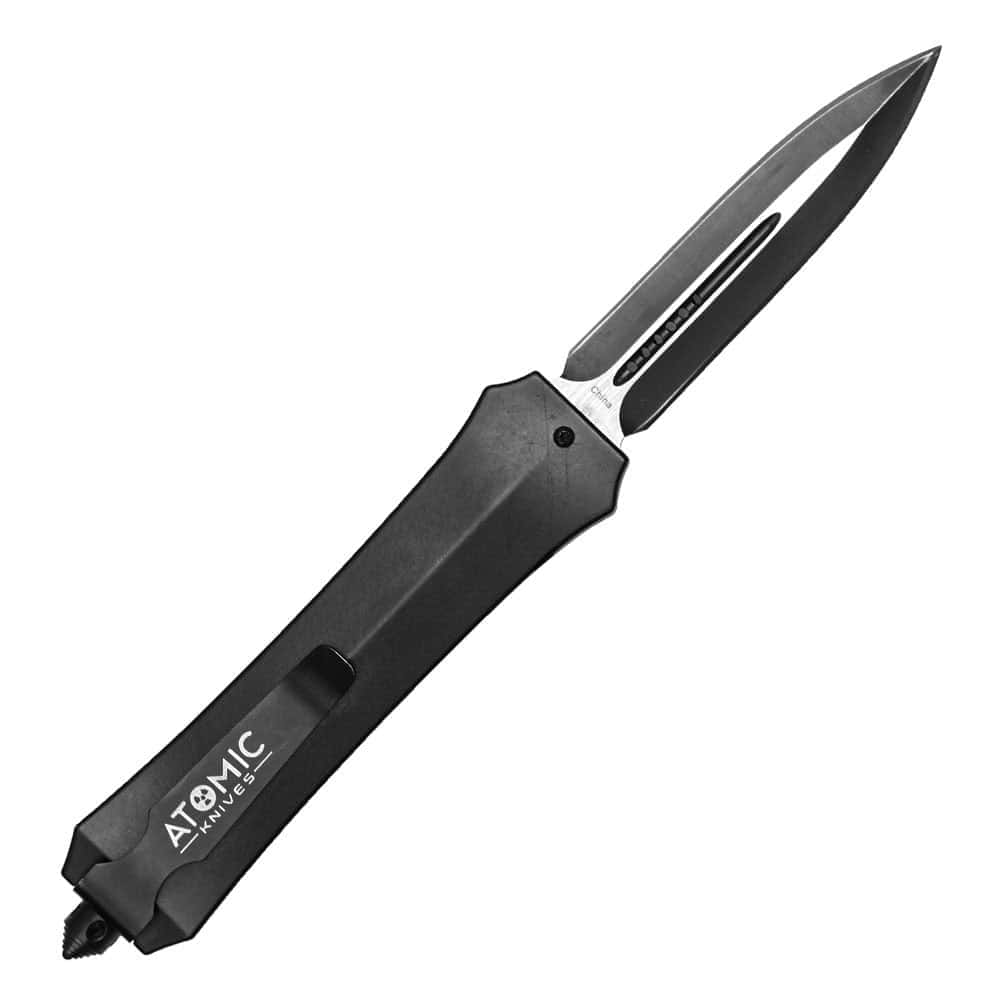
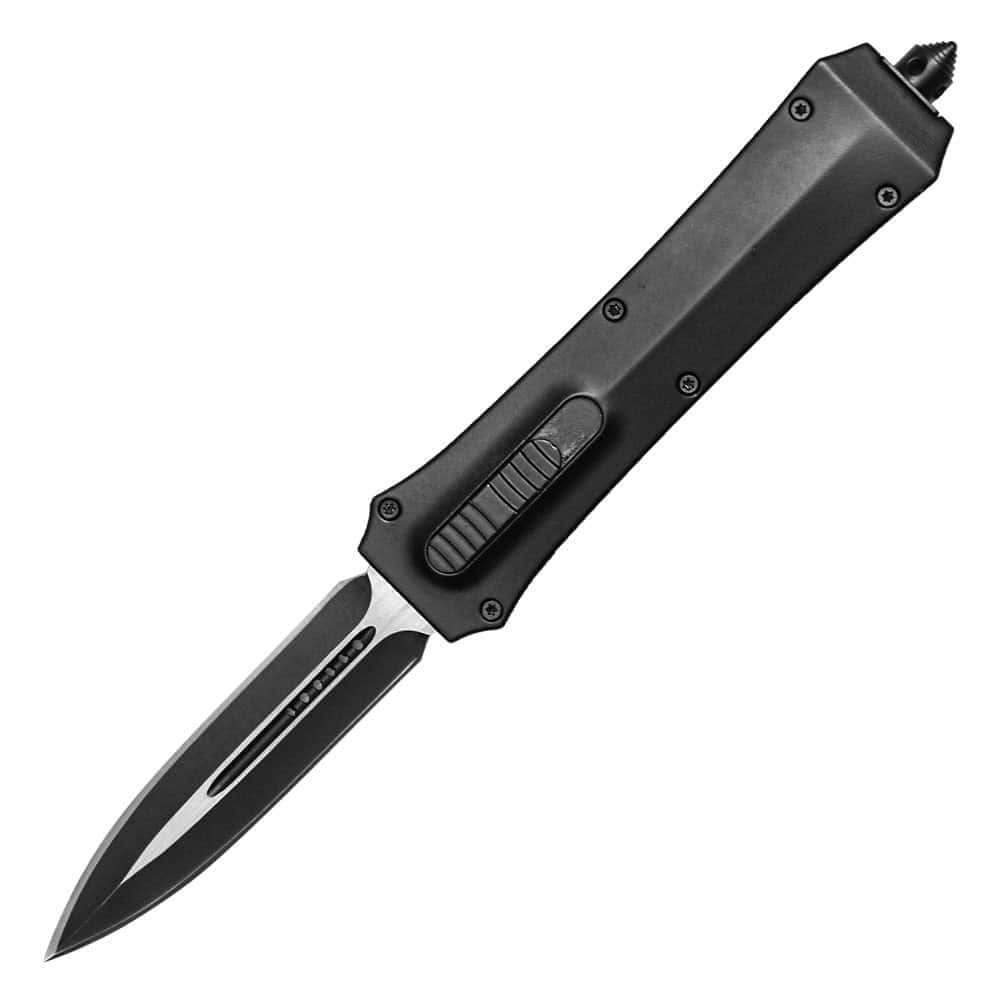
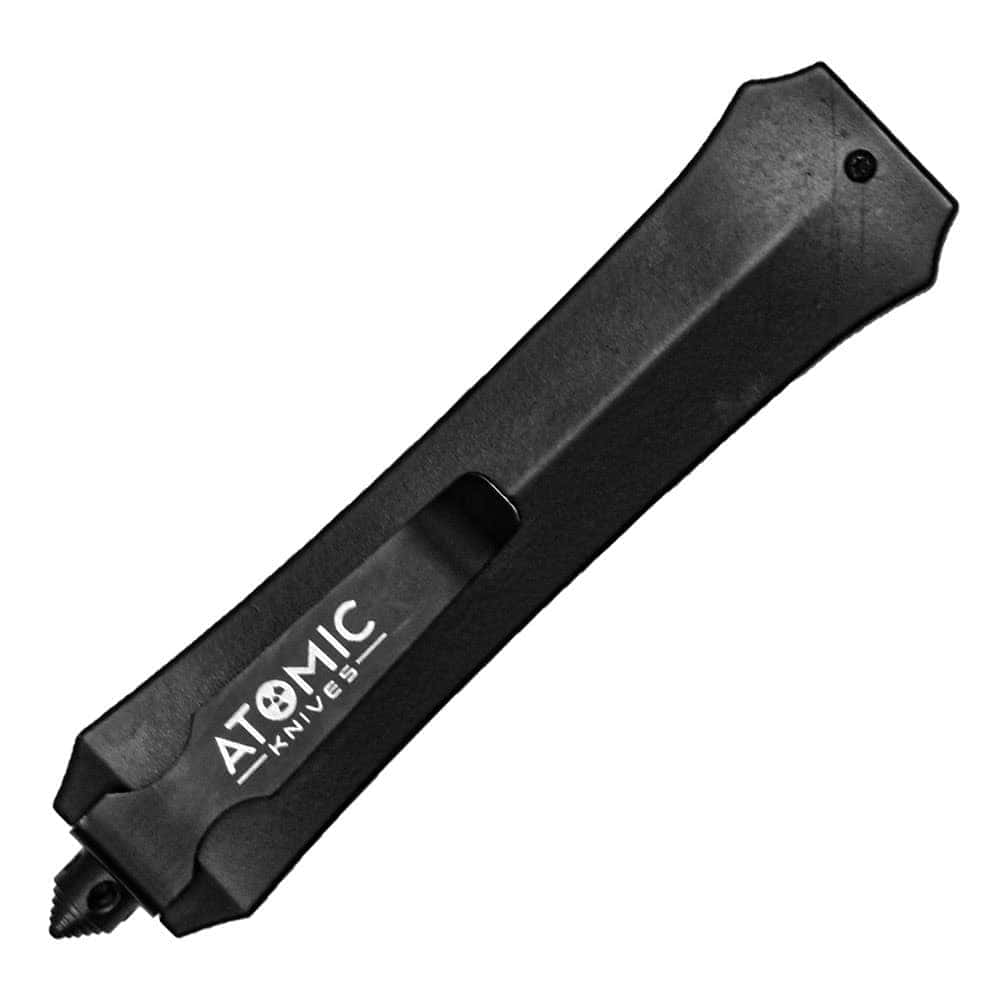
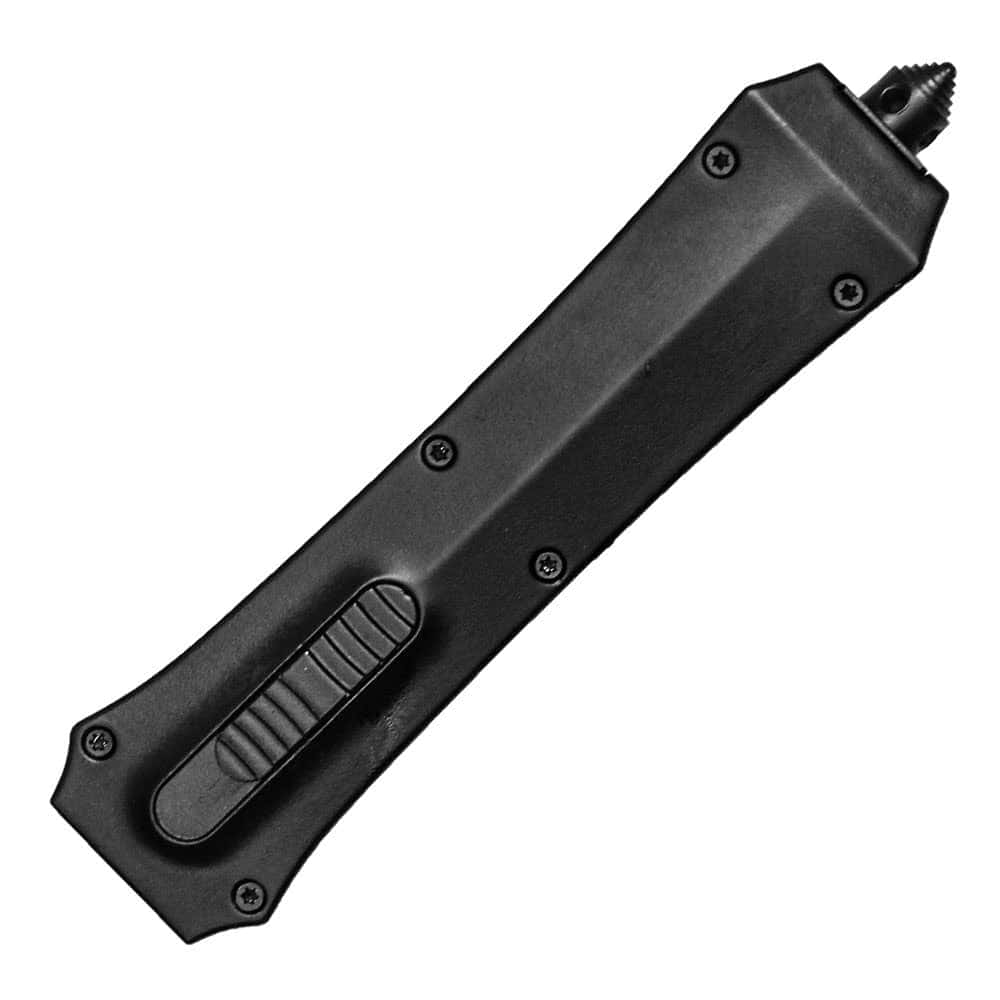
Stun Master OTF Out the Front Automatic Knife Double Edge Blade 9.5″ OAL – 3.75″ Double-Edge Steel Blade, 5.75″ Handle, Premium Steel Construction, 0.7 lbs
$69.95
Buy with Confidence
Covered by a 30-Day Money Back Guarantee. If it's not right for you, returns are easy and hassle-free.

Secure checkout • 100% Satisfaction Guaranteed • 30 Day Money Back Guarantee • Easy Returns • Fast Customer Support
OTF knives are a different experience than a standard side-opening automatic — the blade shoots straight out the front and retracts just as fast. This one’s built with a double-edge 3.75-inch blade, premium steel construction, and a solid mechanism that doesn’t feel cheap. If you’ve been curious about OTF knives, this is a good entry point that won’t disappoint.
- OTF double-edge deployment — 3.75-inch blade fires straight out the front, retracts cleanly
- Premium quality steel — double-edge blade, black finish, holds an edge well
- Solid handle — 5.75 inches, 9.5 inches overall open, good balance in hand
- Fast and easy retraction — same action retracts the blade as deploys it
- 0.7 lbs — a little more weight than a standard folder, but feels substantial
The OTF Experience — Fast Deployment, Double-Edge Blade
There’s a reason people get into OTF knives — the deployment is unlike anything else. Slide the button and the blade is out in a fraction of a second. Slide it back, it retracts. It’s a satisfying mechanism that also happens to be genuinely useful when you need one-handed speed. This one uses a double-edge blade, which gives it a different profile than most everyday folders and a more aggressive capability when you need it.
Who This OTF Knife Is For
Knife enthusiasts who want to experience OTF action without spending a fortune on a high-end brand are going to find this hits a nice middle ground. The premium steel construction and double-edge blade are the draws here — this isn’t a budget novelty, it’s a capable knife.
It also suits people who want a dual-purpose EDC and self-defense tool. The double-edge blade and fast deployment make this more oriented toward personal defense than pure utility. At 0.7 lbs and 5.75 inches closed, it’s a little larger than a minimalist carry — worth knowing before you buy. Good for jacket or cargo pocket carry where the extra size isn’t an issue.
Is This the Right Choice for You?
Choose this OTF knife if you want:
- OTF deployment — straight-out-the-front blade action
- Double-edge blade for a more capable cutting profile
- Premium steel construction at a mid-range price
- Fast one-handed deployment and retraction
Consider something else if you need:
- A more compact closed length — at 5.75 inches, this is larger than a standard EDC folder
- A single-edge blade for general utility tasks — see the single-edge OTF version
How It Actually Works
OTF stands for Out the Front — the blade deploys straight forward through an opening in the tip of the handle rather than swinging out from the side. A sliding button on the handle spine sends the blade out and pulls it back in. The double-edge blade on this model has a symmetrical taper that comes to a sharp point — it’s a different tool than your standard utility folder.
The mechanism on this one is well-built. The deployment is snappy, not sluggish, and the retraction is equally clean. Premium quality steel means the blade holds up to regular use and sharpening. At 9.5 inches overall and 0.7 lbs, it has a substantial feel in hand — some people prefer that weight, and it tracks with the double-edge design being oriented more toward a defense-capable carry than a lightweight work knife.
Quick Comparison: How Does This OTF Knife Stack Up?
| Feature | This OTF Knife | Side-Auto Knife | Manual Folding Knife | Fixed Blade Knife |
|---|---|---|---|---|
| Deployment Style | OTF — out the front ✓ | Side pivot auto | Manual swing-out | N/A — fixed open |
| Deployment Speed | Fastest ✓ | Fast | Moderate | Always ready |
| Blade Style | Double-edge ✓ | Single-edge | Single-edge | Single or double-edge |
| One-Handed Retract | Yes ✓ | No | Sometimes | N/A |
| Carry Size | 5.75″ closed | 4.5″ closed ✓ | Varies ✓ | Needs sheath |
| Best For | EDC, defense, collectors | EDC, utility | General utility | Outdoor, heavy tasks |
Practical Details
Overall length 9.5 inches open, 5.75 inches closed. Double-edge blade measures 3.75 inches, premium quality black steel. Dimensions: 9.5″ x 1.38″. Weighs 0.7 lbs. No batteries. As with all automatic knives, check your state and local laws before purchasing or carrying — OTF knife regulations vary by jurisdiction.
If you want OTF deployment with a double-edge blade and premium steel construction, this delivers the experience at a price that makes sense — fast, reliable, and built to last.
Frequently Asked Questions
What exactly is an OTF knife and how is it different from a regular automatic?
A regular automatic (switchblade) knife has a blade that pivots out from the side of the handle — like a traditional folding knife, just spring-assisted. An OTF (Out the Front) knife fires the blade straight through the tip of the handle along a track. The same sliding button deploys and retracts the blade. OTF knives are faster to deploy and retract one-handed, and they have a distinct mechanical feel that many knife enthusiasts prefer. They’re also generally subject to the same legal restrictions as other automatic knives.
Is a double-edge blade harder to maintain than a single-edge?
Not significantly harder, just a bit more work since you have two edges to sharpen instead of one. You’ll use the same sharpening technique — a rod, stone, or pull-through sharpener — on each side. The double-edge design also means you need to handle the blade more carefully during cleaning and sharpening since there’s no spine to rest your thumb on. Keep a cloth between your hand and the blade when wiping it down.
Are OTF knives legal in my state?
OTF knives are classified as automatic knives in most jurisdictions and are subject to the same regulations. Laws vary significantly by state — some states permit them without restriction, others limit blade length, and some have more significant restrictions. Federal law also restricts transporting automatic knives across state lines in some circumstances. Check your current state and local knife laws before purchasing. When in doubt, consult a legal resource in your area.
How reliable is the OTF mechanism over time?
OTF mechanisms on quality-built knives hold up well with basic care. Keep the track clean of debris and lint, apply a drop of light oil to the blade track periodically, and the mechanism will stay smooth and fast. Avoid forcing the blade if it feels stiff — that usually means debris in the track or the spring needs attention. With reasonable maintenance, a quality OTF knife is reliable for years of regular use.
| Type of Knife | Automatic |
|---|---|
| Overall Length | 9.5 inches |
| Blade Length | 3.75 inches |
| Collapsed Length | 5.75 inches |
| Weight | 0.7 lbs |
| Dimensions | 9.5" x 1.38" |
Additional information
Related products
-
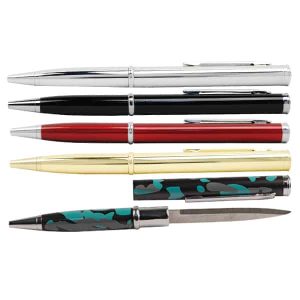
Pen Knife Disguised Folding Blade 5.38 In Overall, 2.13 In Blade – Functional Ink Pen, 5 Colors, Pen Cap Safety, Black, Silver, Gold, Red, Camo
$6.00 Select options This product has multiple variants. The options may be chosen on the product page -
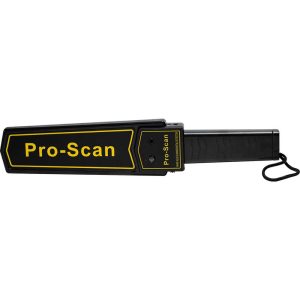
Pro Scan Handheld Metal Detector Security Scanner – Detects Handguns to 5″, Knives to 4″, 5°F–131°F Range, Leatherette Holster, Lifetime Warranty, 9V Battery
$27.00 Add to cart -
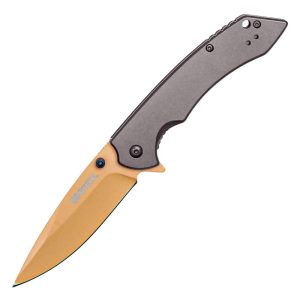
Assisted Open Folding Pocket Knife 8 Inch Overall – 3.5 Inch 3Cr13 Steel Blade, Stainless Handle, Belt Clip, Lanyard Hole, Green, Orange, Purple, or Red
$20.85 Select options This product has multiple variants. The options may be chosen on the product page -
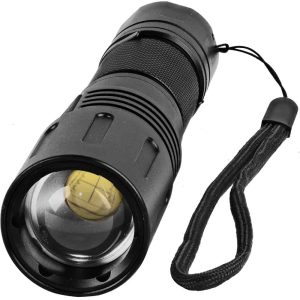
Safety Technology 3000 Lumen LED Zoomable Self-Defense Flashlight – Aircraft-Grade Aluminum, Blinding Strobe, SOS Mode, 1300-Foot Beam, Rechargeable 26650 Battery, Belt Clip Included
$44.95 Add to cart