Dummy Cameras for Front Door
The front door is where most package thieves and porch pirates make their approach — and it’s the first thing any visitor sees. A camera positioned there doesn’t have to be recording to do its job. As long as it looks like it might be, it changes the math for anyone thinking about helping themselves to your stuff. A well-mounted dummy camera at the right height, aimed at the approach, is often all it takes.
Dummy Cameras That Work at the Front Door
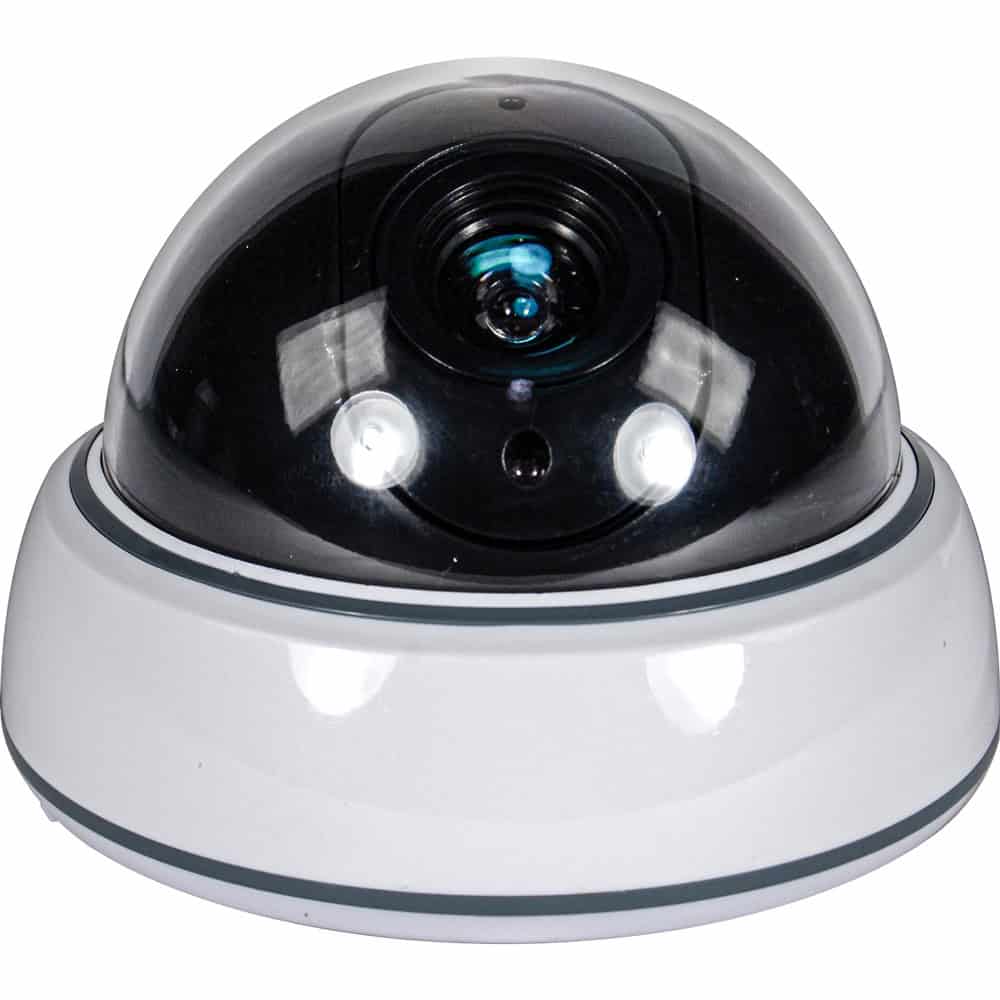
Dummy Dome Camera With LED, White Body — $8.95
What Makes a Dummy Camera Work at the Front Door
Mount height matters. Real doorbell cameras and entryway cameras typically sit between seven and ten feet off the ground. If your dummy camera is mounted at eye level or on a fence post, it looks off. Soffit or eave mounting near the door, angled toward the approach, reads as legitimate.
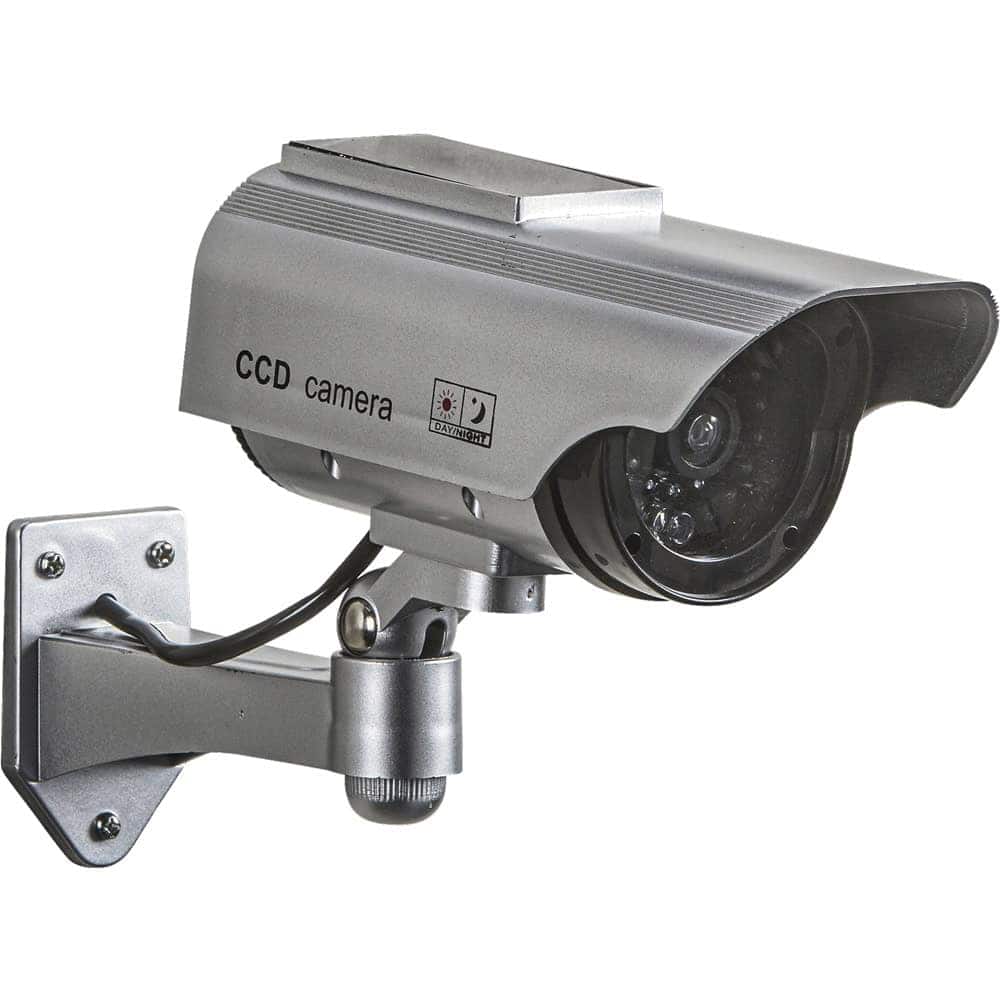
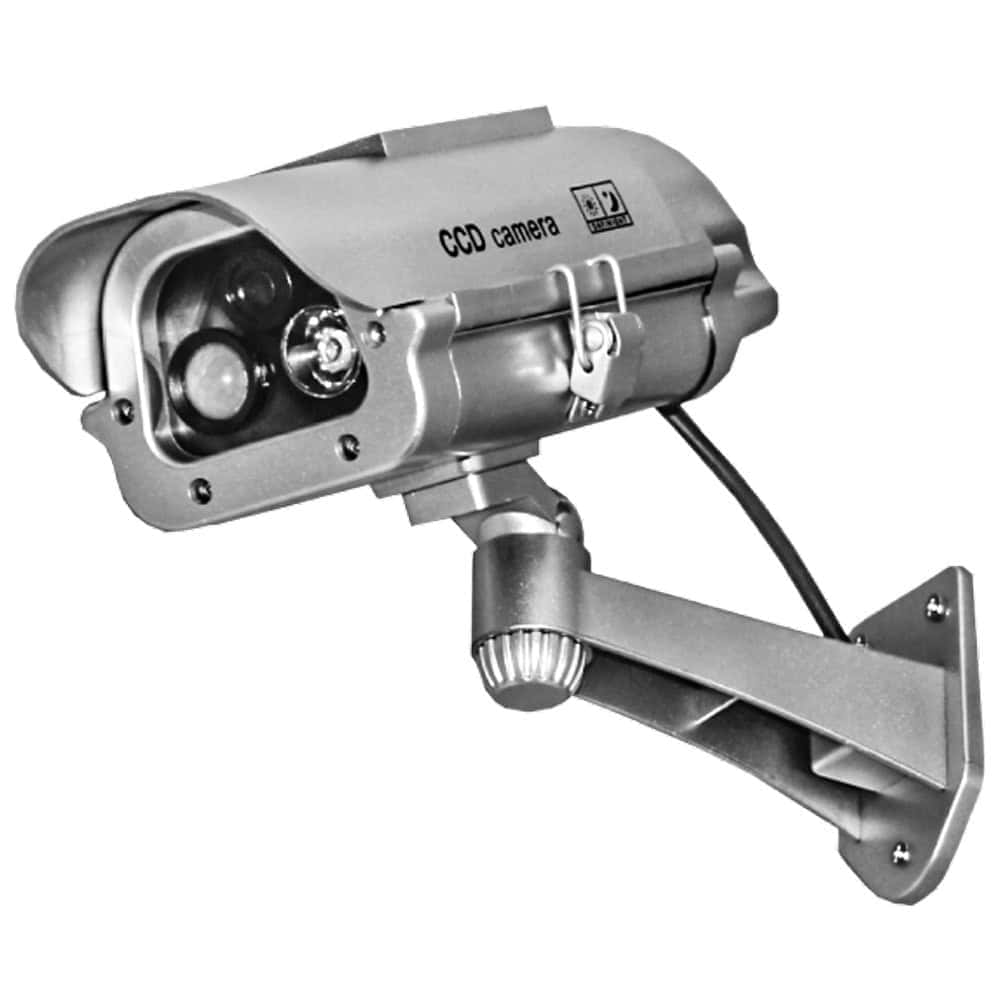
Motion-activated LED. The Solar Powered Dummy Camera with Motion Activated Flashing LED activates when someone approaches within 15 feet. That’s not just more realistic — it’s more noticeable to someone who might otherwise walk past without registering the camera at all.
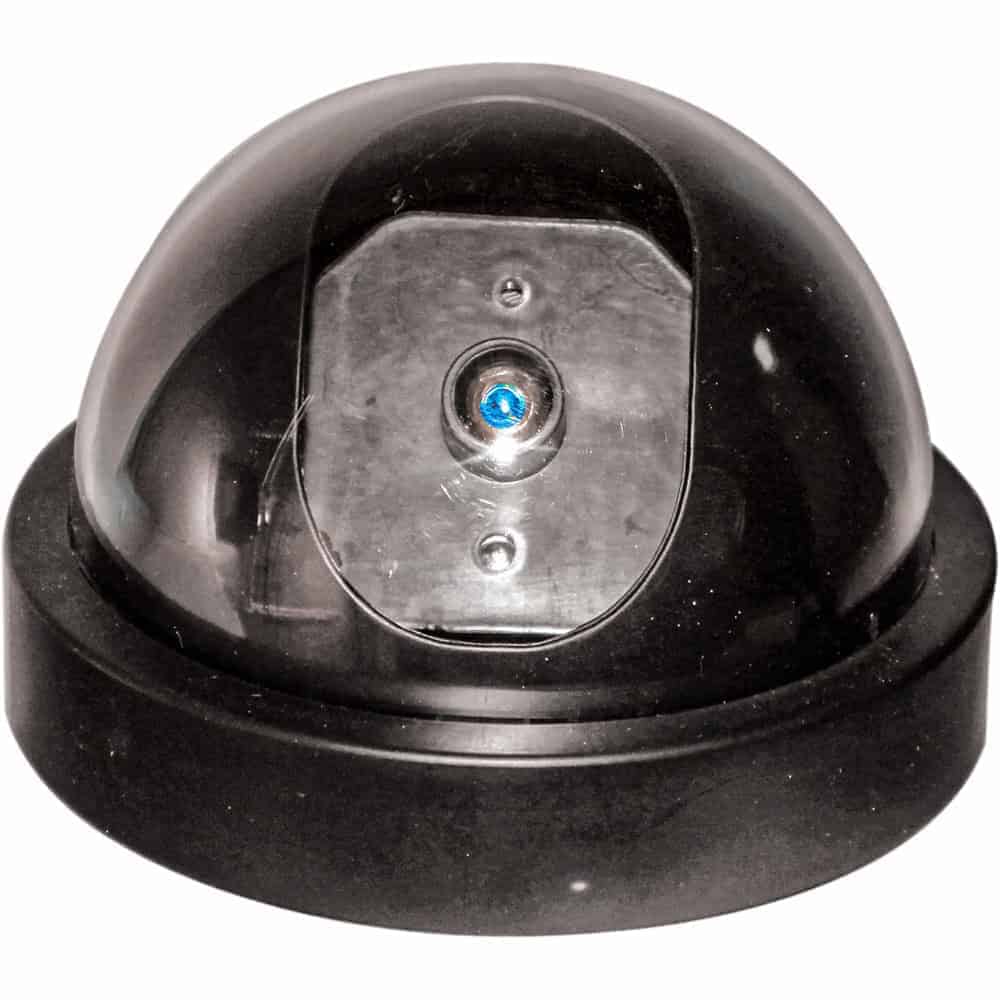
Matching the house exterior. White is a common color for front-door cameras because it tends to match trim and soffit. The Dummy Dome Camera With LED, White Body blends into light-colored exteriors naturally. For darker exteriors, the standard black dome model tends to disappear against the wall — also convincing, just in a different way.
No wiring required. If you’re renting, or just don’t want to deal with running cable, the solar models handle themselves. Mount once, forget about maintenance.
Pair with a sign. A “property monitored by video surveillance” placard near the door adds another layer. The camera handles visual deterrence; the sign handles anyone who spots the camera and wants confirmation.
How to Mount a Dummy Camera at Your Front Door
Choose your mounting spot. Above the door frame, under the eave, or on the corner of the porch — anywhere that gives a clear sightline toward whoever is approaching. Ideally you want it aimed at where someone would stand while knocking or examining the porch.
Angle it correctly. A camera aimed straight down at the ground looks wrong. Real cameras are tilted outward to capture faces and approach angles. Set the dummy camera to roughly the same tilt a real one would have.
Check visibility from the street. After mounting, walk out to the sidewalk and look back. If you can’t see the camera, neither can a porch pirate walking by. It should be visible but not so obvious it looks staged.
Solar panel orientation. For the solar models, make sure the small panel has some sun exposure. A south-facing surface works best in most of the US. Even indirect light for part of the day is usually enough to keep the LED running.
Frequently Asked Questions
A: It can make porch pirates think twice, especially if it looks convincing and is positioned where someone would naturally notice it. Opportunistic thieves don’t want to risk being recorded. That said, determined or repeat offenders may have learned to spot fake cameras. A dummy camera is a low-cost deterrent, not a guarantee — but paired with good lighting and a security sign, it’s a reasonable layer of defense.
A: In most cases, yes — placing a dummy camera on your own property is permitted. Some areas have rules about recording public spaces or creating a false impression of surveillance, so the specifics can vary. Take a look at our Laws & Restrictions page at https://stunmaster.com/law-and-restrictions/ if you want to check what applies in your state.
A: Seven to ten feet off the ground is the typical range for real entryway cameras — mounting a dummy in that range keeps it looking credible. Too low and it’s easy to tamper with or looks misplaced. Too high and it loses the natural look of a real install. Soffit mounting above the door frame is usually the cleanest option.
A: A real doorbell camera records footage, often with motion alerts and cloud storage. A dummy camera records nothing — it’s purely a visual deterrent. Dummy cameras are significantly cheaper and easier to install, but they won’t give you evidence after the fact. If you need actual footage, you need a real camera. If you just want to discourage people from approaching, a dummy camera does the job at a fraction of the cost.
A: Not necessarily direct sunlight — the solar panel on models like the Solar Powered Dummy Camera with Motion Activated Flashing LED will charge from indirect or partial sun as well. In low-light conditions, charge will be slower, but the built-in rechargeable batteries store enough to run the LED for extended periods. Mounting where the panel gets at least some daily light keeps things working reliably.
Questions About Dummy Camera Placement or Models?
Call us at 800-859-5566 and we'll help you figure out which option fits your setup.
Shop All Dummy Cameras