


Stun Master Aircraft-Grade Aluminum Kubotan Keychain Self-Defense Tool – 5.5 Inches, 0.17 lbs, Pressure Point Grip, Keyring Included, Black, Red, or Silver
$10.00
Buy with Confidence
Covered by a 30-Day Money Back Guarantee. If it's not right for you, returns are easy and hassle-free.

Secure checkout • 100% Satisfaction Guaranteed • 30 Day Money Back Guarantee • Easy Returns • Fast Customer Support
A kubotan is about as simple as self-defense tools get — solid aluminum rod, about the size of a marker, lives on your keychain. You already have your keys in your hand half the time anyway. This one is aircraft-grade aluminum, so it’s got some actual heft without being heavy, and it’ll take a lot of abuse without bending or cracking.
- Aircraft-grade aluminum construction — solid, lightweight, and durable
- 5.5 inches long, 0.17 lbs — fits naturally in a closed fist for a reinforced grip
- Keyring included — attaches directly to your existing keychain
- Available in black, red, and silver — low-profile, nothing tactical-looking about it
- No batteries, no permits required in most areas — just carry it
The Self-Defense Tool That’s Been Around Forever for a Reason
The kubotan has been used in law enforcement training since the 1970s. It was developed in Japan specifically as a non-lethal compliance tool, and it’s stuck around because the concept is genuinely simple and effective: a short, hard rod gives you leverage, grip reinforcement, and the ability to apply pressure to sensitive points on the body without requiring size, strength, or training to be useful.
This version is made from aircraft-grade aluminum — stronger than the plastic or cheap zinc versions floating around — and it’s sized right at 5.5 inches to sit comfortably in a closed fist with the ends exposed.
Who This Kubotan Is For
Anyone who wants something discreet on their keychain that gives them a little more option if they ever need it. It doesn’t look like a weapon — most people would assume it’s a stylus or a small tool of some kind. That’s actually part of the point.
Good for people who live or work in places where carrying a stun gun or pepper spray is inconvenient, restricted, or just more than they want to deal with. Also popular with people who’ve taken any kind of basic self-defense class and want a tool that works with what they’ve learned.
At 0.17 lbs, you genuinely won’t notice it on your keychain. Worth considering for college students, commuters, or anyone who spends time walking to their car at night.
Is This the Right Choice for You?
Choose the kubotan if you want:
- Something completely discreet that lives on your keychain without drawing attention
- A no-battery, no-maintenance option you’ll always have with you
- A legal option in areas where pepper spray or stun guns are restricted
- A tool that works with basic grip and pressure-point techniques
Consider something else if you need:
- Distance — a kubotan only works in close contact; pepper spray gives you standoff range
- An instant deterrent — stun guns and alarms create an immediate reaction without physical engagement
Simple Design, Practical Logic
The kubotan works on straightforward mechanics. Held in a closed fist, it reinforces your grip and extends the striking surface of your knuckles. Applied to pressure points — wrists, forearms, the back of the hand — it creates significant discomfort and compliance leverage without requiring injury. It’s the same reason it’s been a police training tool for decades.
Aircraft-grade aluminum is the right material for this. It won’t bend under pressure, won’t crack from impact, and doesn’t corrode. The finish holds up on a keychain that gets tossed around daily. At 5.5 inches by 0.5 inches, it sits flush in a closed hand — nothing protruding awkwardly.
The included keyring attaches directly to your existing keys. You don’t need to think about it, carry it separately, or remember to grab it. It’s already there when you reach for your keys.
Quick Comparison: How Does the Kubotan Stack Up?
| Feature | Kubotan | Pepper Spray | Stun Gun | Personal Alarm |
|---|---|---|---|---|
| Carry Method | Keychain ✓ | Keychain/pocket | Pocket/holster | Keychain ✓ |
| Battery Required | No ✓ | No ✓ | Yes | Yes |
| Effective Range | Contact only | Up to 15 feet ✓ | Contact only | N/A — audible alert |
| Discretion | High ✓ | Moderate | Low | Moderate |
| Legal Restrictions | Few ✓ | Some states | More restrictions | Very few ✓ |
| Best For | Discreet everyday carry, restricted areas | Standoff distance defense | Higher deterrent output | Attention-drawing, non-contact |
Practical Details
Dimensions: 5.5 inches x 0.5 inches. Weight: 0.17 lbs. Material: aircraft-grade aluminum. Includes keyring. Available in black, red, and silver. No batteries, no maintenance. Legal in most U.S. states — check your local regulations. Not recommended for air travel carry-on without checking TSA guidelines first.
Simple, solid, and already on your keychain — the kubotan has earned its reputation as one of the most practical low-profile carry tools around.
Frequently Asked Questions
Do I need training to use a kubotan effectively?
Basic use — grip reinforcement and striking — doesn’t require formal training. More refined pressure-point techniques benefit from some instruction, and many self-defense classes include kubotan basics. Even without training, the simple act of holding it during a confrontation gives you a more solid grip and a harder striking surface than an empty fist. YouTube has solid introductory tutorials if you want to get familiar with the fundamentals before committing to a class.
Is the kubotan legal to carry?
In most U.S. states, yes. The kubotan generally falls outside the restrictions that apply to knives, stun guns, and pepper spray. That said, a few jurisdictions classify it as a prohibited weapon, and carry on aircraft is not permitted. Worth a quick check of your state and local laws before dropping it on your keychain.
How does aircraft-grade aluminum compare to other materials?
Aircraft-grade aluminum — typically 6061 alloy — is significantly stronger than standard aluminum and much harder than plastic. It resists bending under impact force and holds up to daily keychain abuse without corroding or losing its finish. For a tool that’s supposed to transmit force effectively, the material rigidity matters. Plastic and softer alloy versions flex where you don’t want flex.
Will it add a lot of weight to my keychain?
At 0.17 lbs, it’s about the weight of a house key plus a car fob together. Most people don’t notice it after the first day. It’s lighter than the average pocket knife and considerably lighter than a stun gun or spray canister. The 5.5-inch length is the more noticeable factor in a pocket — some people clip it to a belt loop instead if they prefer.
| Material | Aircraft Aluminum |
|---|---|
| Included | Keyring |
| Weight | 0.17 lbs |
| Dimensions | 5.5" x 0.5" |
Additional information
Related products
-
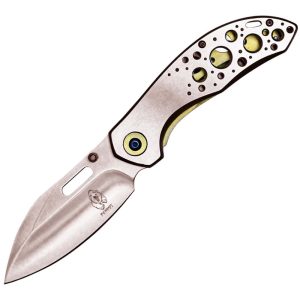
Assisted Open Folding Pocket Knife with Gold Trim, Two-Tone 3.5″ 3Cr13 Steel Blade, Stainless Steel Handle, 8″ Overall, Belt/Visor Clip Included
$18.35 Add to cart -

Assisted Open Folding Pocket Knife 8.5 Inch Overall – 4 Inch 3Cr13 Steel Blade, Belt/Visor Clip, Slim EDC Carry, Gold & Black, Silver, or Silver & Black
$20.65 Select options This product has multiple variants. The options may be chosen on the product page -
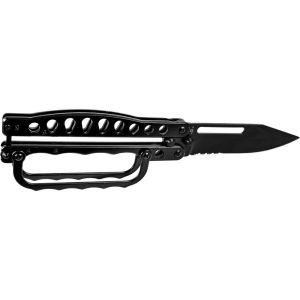
Butterfly Trench Knife with Knuckle Guard – 5″ Serrated Stainless Steel Blade, 11″ Overall Length, Removable Metal Knuckle Guard, Latch Safety, Available in 3 Finishes
$19.95 Select options This product has multiple variants. The options may be chosen on the product page -
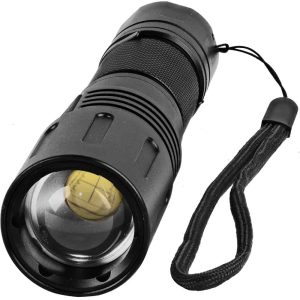
Safety Technology 3000 Lumen LED Zoomable Self-Defense Flashlight – Aircraft-Grade Aluminum, Blinding Strobe, SOS Mode, 1300-Foot Beam, Rechargeable 26650 Battery, Belt Clip Included
$44.95 Add to cart