


Nap Alarm Anti-Drowsiness Alert Device – 80dB Ear-Worn Position Sensor, Instant Wake Alarm, Fits Over Ear, Battery Included, for Drivers, Guards, and Students
$9.95
Buy with Confidence
Covered by a 30-Day Money Back Guarantee. If it's not right for you, returns are easy and hassle-free.

Secure checkout • 100% Satisfaction Guaranteed • 30 Day Money Back Guarantee • Easy Returns • Fast Customer Support
Simple idea, and it works. You wear it over your ear, and when your head starts to drop forward — like it does when you’re dozing off — it triggers an 80dB alarm that snaps you back awake. No complicated setup, no subscription app, no phone required. Just a small device that does one thing and does it reliably. For anyone who drives long distances or works a shift where staying alert matters, that’s worth something.
- Electronic position sensor detects head nodding and triggers an 80dB alarm instantly
- Ear-worn design — sits over the ear, stays in place, activates on head position change
- Works for drivers, security guards, machine operators, and students in any setting
- Compact and lightweight at 0.06 lbs — barely noticeable once it’s on
- Three AG3 alkaline button cell batteries included — ready to use out of the box
It Does One Thing, and That One Thing Matters
There’s not much to say about the Nap Alarm that isn’t obvious — it catches you dozing off before you actually fall asleep. The position sensor detects when your head tilts forward the way it does when you’re losing the battle with drowsiness, and fires off an alarm loud enough to get your attention fast. Simple, small, effective.
Most people who’ve experienced microsleep while driving — that moment where you catch yourself and realize you weren’t fully awake — understand why something like this exists. It’s not about replacing rest. It’s about the moments between stops when you need to hold on a little longer.
Who This Nap Alarm Is For
Long-haul drivers and commuters are the obvious fit. Anyone who covers significant miles alone, especially at night, has probably felt that head-nodding moment. The Nap Alarm is there for exactly that — not as a substitute for pulling over and sleeping, but as an early warning that it’s time to do exactly that.
Security guards working overnight shifts are another natural user. Sitting still in a quiet environment at 3am is challenging even for disciplined people. Having a device that alerts you before you’re fully out keeps you on the job and keeps the people or premises you’re watching over actually watched.
Students who study late and machine operators in factory settings are also good candidates. Any situation where dozing off has real consequences — and where the person wants a simple, low-tech solution they can keep in a pocket — is a fit for this device.
Is This the Right Choice for You?
Choose the Nap Alarm if you want:
- A simple, no-app, no-phone drowsiness alert that works automatically
- Something small enough to keep in a glove box, desk drawer, or jacket pocket
- An affordable solution that doesn’t require any setup or subscription
Consider something else if you need:
- In-vehicle drowsiness detection systems — some vehicles and aftermarket devices monitor eye movement for more comprehensive alertness tracking
- A long-term solution to chronic fatigue — this addresses the symptom, not the cause
How It Works
The Nap Alarm sits over your ear like a small earpiece. Inside is an electronic position sensor that monitors the angle of your head. Normal head movement while awake doesn’t trigger it — but the gradual forward tilt that happens as you start to drift off does. When it detects that drop, it sounds the 80dB alarm. That’s loud enough to be immediately effective without being so extreme that it startles you dangerously.
The design is intentionally simple. No buttons to press to arm it, no pairing to a device, no settings to configure. Put it on, and it works. When you get to your destination or take a break, take it off. That’s the whole workflow.
At 0.06 lbs and roughly 2 inches in its largest dimension, it barely registers once it’s on. Most drivers wear it under a hat or just over the ear without it being noticeable to passengers.
Quick Comparison: How Does the Nap Alarm Stack Up?
| Feature | Nap Alarm | Caffeine / Energy Drinks | Vehicle Drowsiness Systems | Fatigue-Detection Apps |
|---|---|---|---|---|
| Automatic Detection | Yes ✓ | No | Yes ✓ | Yes ✓ |
| Cost | Under $10 ✓ | Ongoing cost | $50–$300+ | Free–$10/mo |
| Setup Required | None ✓ | None | Installation | Phone required |
| Works Without Phone | Yes ✓ | Yes ✓ | Yes ✓ | No |
| Portable / Universal | Yes ✓ | Yes ✓ | Vehicle-specific | Yes |
| Best For | Drivers, guards, students | Short-term alertness | New vehicle owners | Smartphone users |
Practical Details
Weighs 0.06 lbs and measures 1 7/8″ x 2 1/4″ x 5/8″ — very small. Runs on three AG3 alkaline button cell batteries, which are included. Alarm volume is 80dB. Color is black. No charging required — swap batteries when they eventually run low. No warranty information listed — check with the manufacturer for current coverage details.
For under ten bucks, it’s the kind of thing that’s worth keeping in the glove box. You might not use it often — but the times you do, you’ll be glad it’s there.
Frequently Asked Questions
Will it trigger from normal head movement while driving?
The position sensor is calibrated specifically for the forward head tilt associated with drowsiness, not the side-to-side and slight movements of normal driving. Checking mirrors, looking at passengers, or adjusting your position shouldn’t set it off. It’s designed to detect the specific involuntary drop that happens as you lose alertness — that’s a different movement pattern than normal awake head motion.
How loud is 80dB in practice?
80 decibels is roughly the volume of a loud alarm clock or a busy restaurant. In a quiet car at night, it’s more than enough to snap someone fully awake. It’s not so loud that it would cause a startled dangerous reaction, but it’s loud enough that you’re not going to sleep through it. The proximity to your ear makes it more effective than the raw number suggests.
How long do the batteries last?
AG3 button cell batteries in a device like this typically last a long time — months of regular intermittent use. The alarm only draws real power when it sounds, so standby current is very low. Replacement batteries are widely available and inexpensive. The three included batteries will get you started with plenty of life.
Is this a replacement for proper sleep before a long drive?
No, and it shouldn’t be treated as one. The Nap Alarm is a warning device — it tells you when you’re starting to drift so you can pull over and rest, get some coffee, or take a break. It’s not designed to keep a severely fatigued person alert through willpower. Think of it as an early warning system that buys you time to make a smart decision, not a substitute for being rested.
| Decibles | 80 db |
|---|---|
| Battery | 3 AG3 Alkaline Button Cell (Included) |
| Color | Black |
| Weight | 0.06 lbs |
| Dimensions | 1 7/8" x 2 1/4" x 5/8" |
Additional information
Related products
-
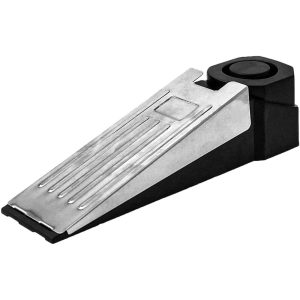
Safety Technology Door Stop Alarm with 120dB Siren – Wedge Block, Movement Sensor, Low Battery Indicator, One 9-Volt Battery, 6.375 x 1.75 Inches
$7.95 Add to cart -
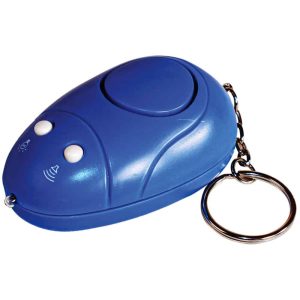
Safety Technology Keychain Personal Alarm with Flashlight – 130dB Siren, Pull-Pin or Button Activation, 2 AAA Batteries Included, Blue, 3″ x 1″
$10.00 Add to cart -
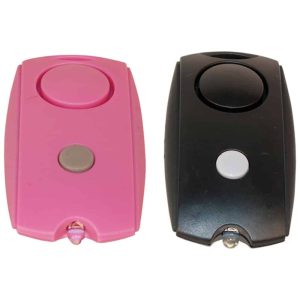
Stun Master Mini Personal Alarm with LED Flashlight and Belt Clip 120dB – Keychain or Pocket Carry, 3 LR44 Batteries Included, Black or Pink, 3 x 1.5 x 0.5 Inches
$8.95 Select options This product has multiple variants. The options may be chosen on the product page -
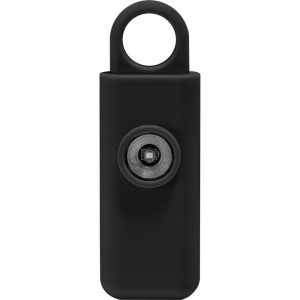
Safety Technology Personal Panic Alarm 130dB with 350-Lumen Strobe Light – Pull-Pin Activation, 2 CR2032 Batteries Included, Key Ring Attach, Black, Blue, or Pink
$15.00 Select options This product has multiple variants. The options may be chosen on the product page