
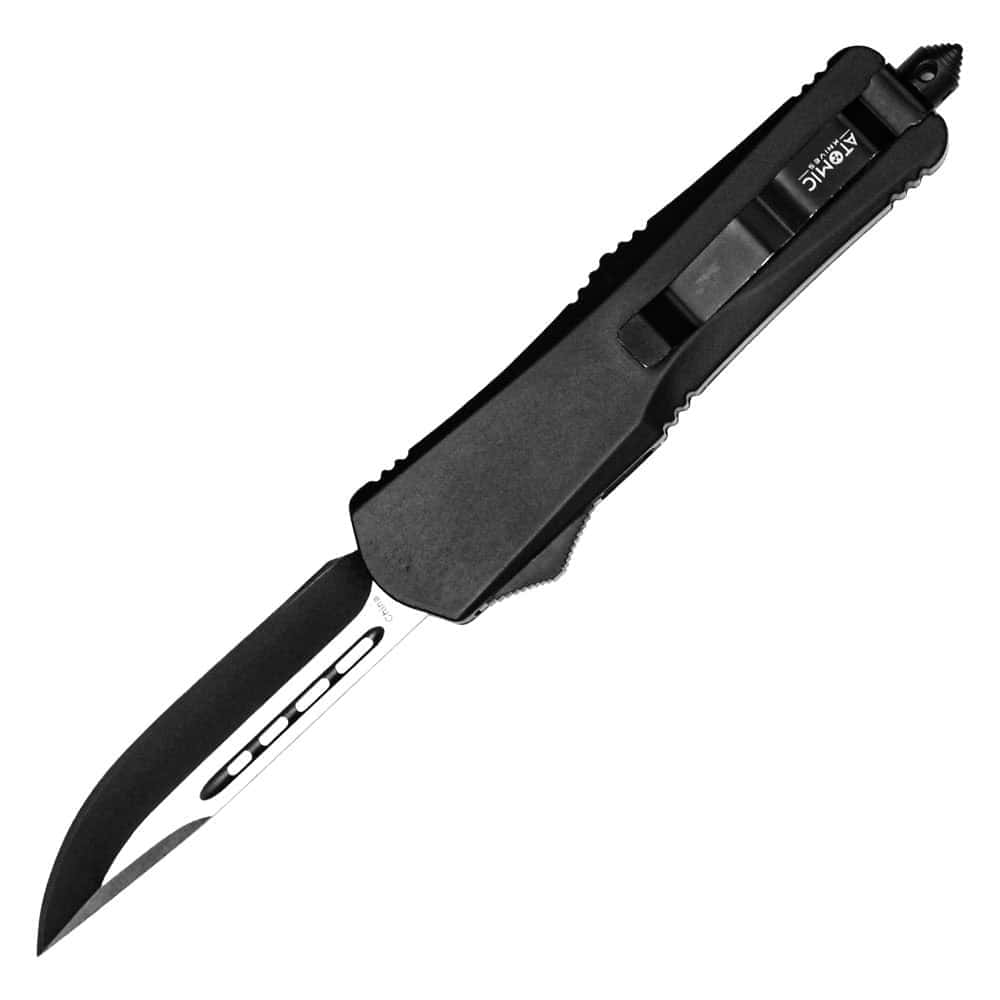
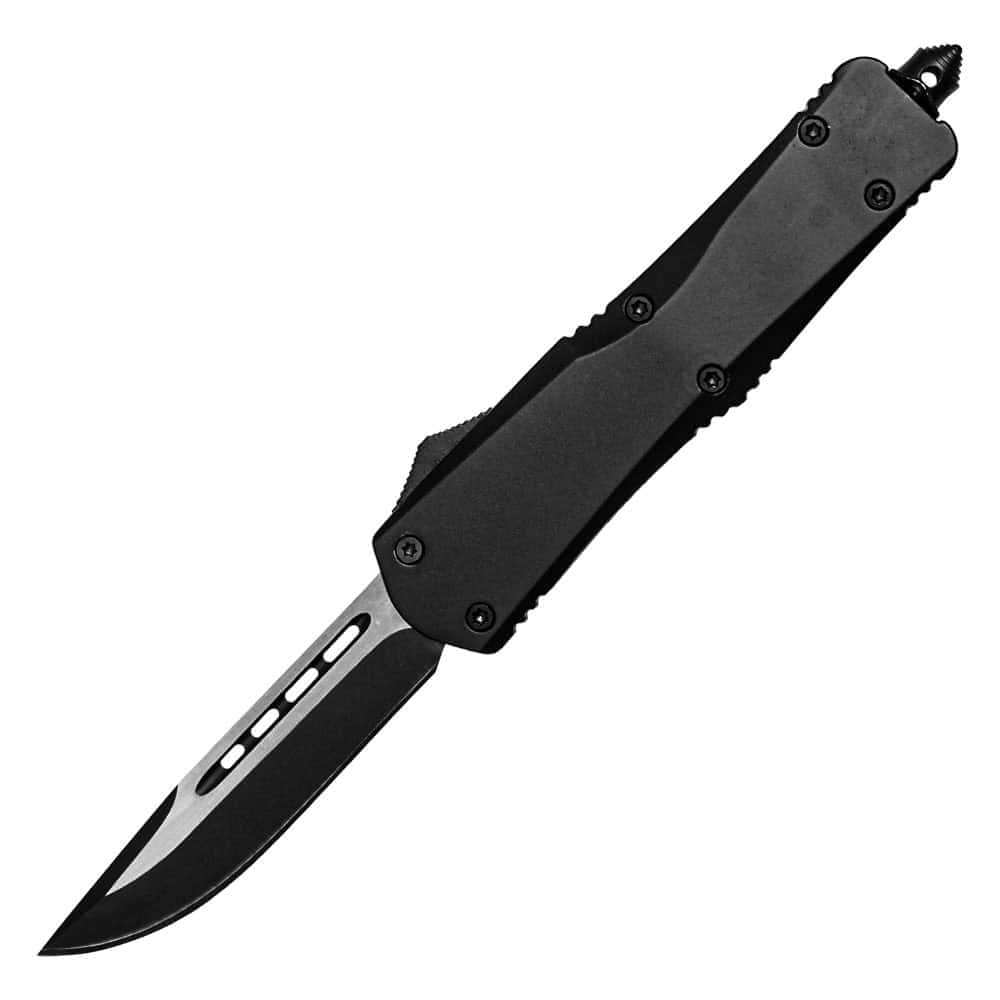
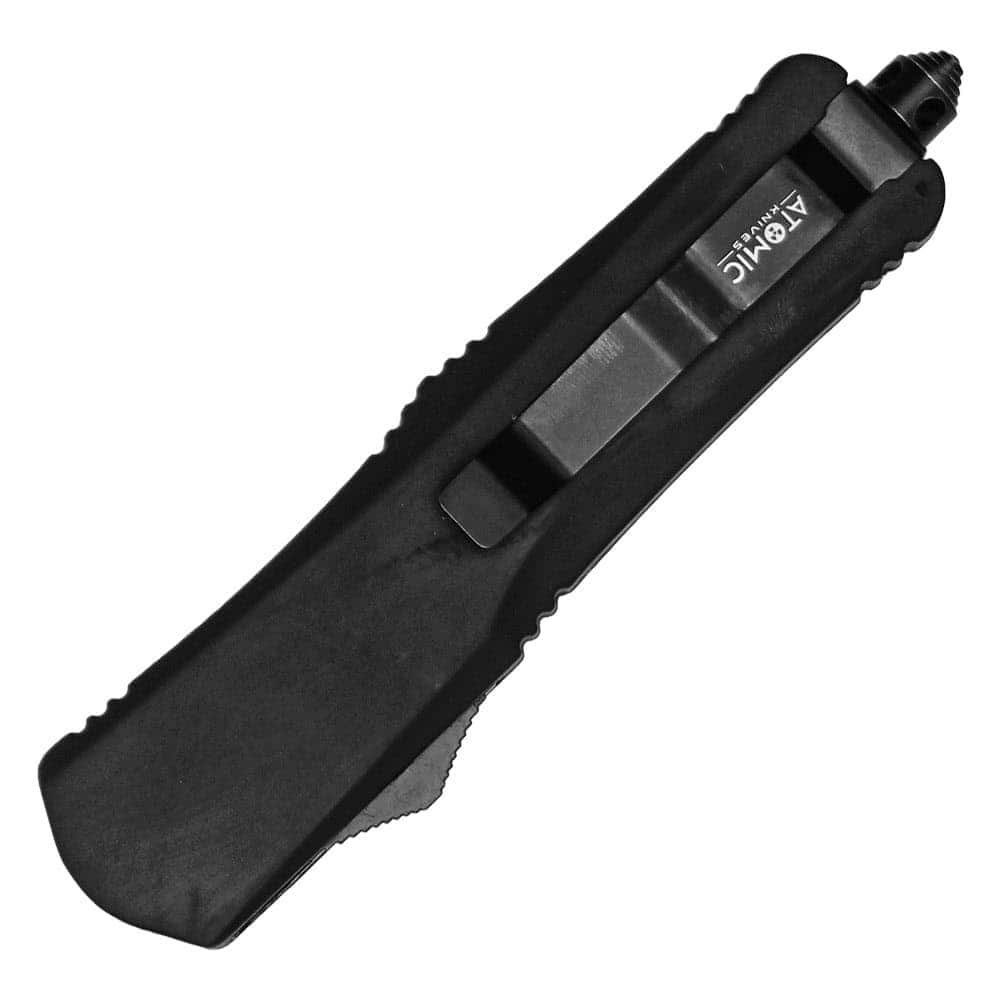
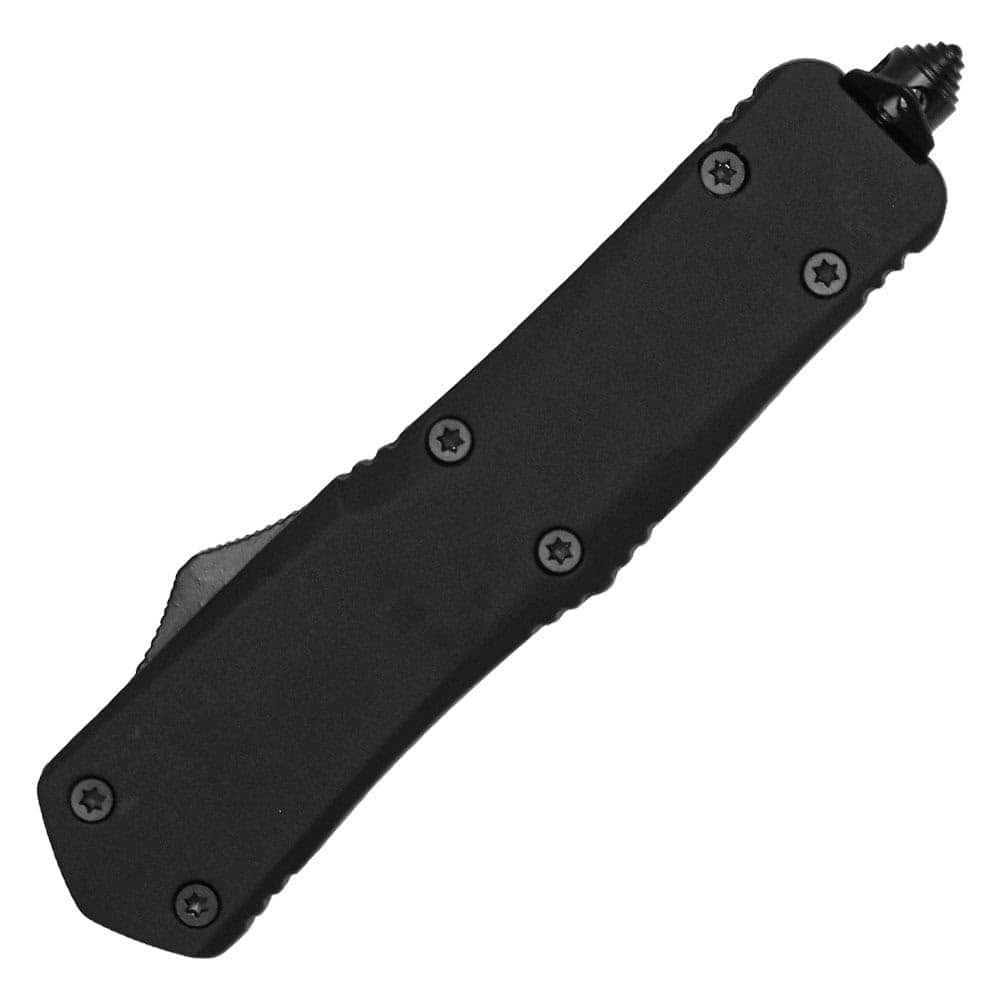
Stun Master OTF Out the Front Automatic Knife Single Edge Blade 9″ OAL – 3.5″ Single-Edge Steel Blade, 5.5″ Handle, Premium Steel Construction, 0.7 lbs
$69.95
Buy with Confidence
Covered by a 30-Day Money Back Guarantee. If it's not right for you, returns are easy and hassle-free.

Secure checkout • 100% Satisfaction Guaranteed • 30 Day Money Back Guarantee • Easy Returns • Fast Customer Support
Same OTF platform as the double-edge version, but with a single-edge 3.5-inch blade that’s more practical for everyday utility tasks. The OTF mechanism is just as fast — deploy and retract one-handed with a slide of the thumb. If you want OTF action but prefer a blade you can actually use for cutting tasks day-to-day, this is the more versatile choice.
- OTF single-edge deployment — 3.5-inch blade fires straight out the front, retracts cleanly
- Premium quality steel — single-edge blade with a usable spine, black finish
- 9-inch overall length — 5.5 inches closed, manageable carry in a jacket or cargo pocket
- Lightning-fast deployment and retraction — same button for both actions
- 0.7 lbs — solid feel without being unnecessarily heavy
OTF Speed, Single-Edge Practicality
The single-edge blade makes this one a more well-rounded everyday carry than the double-edge version. You still get the OTF deployment — blade out the front in a fraction of a second — but the single-edge profile gives you a spine to work with for general cutting tasks. It’s slightly more compact too: 9 inches overall versus 9.5, and 5.5 inches closed versus 5.75. Small differences, but worth knowing.
Who This OTF Knife Is For
If you want the OTF experience but plan to actually use the knife for utility tasks — cutting cord, opening packages, camping, general work — the single-edge blade is the smarter pick. You can apply thumb pressure to the spine when you need it, and sharpening is more straightforward with one edge to maintain.
It’s also a solid choice for someone who wants OTF deployment for self-defense but prefers a blade that transitions naturally into everyday tasks. The fast one-handed action means the knife is ready when you need it, and the single-edge design keeps it versatile when you don’t. Good for jacket pocket carry where a 5.5-inch folded length is workable.
Is This the Right Choice for You?
Choose this OTF knife if you want:
- OTF out-the-front blade deployment — fastest one-handed action available
- A single-edge blade that works for both utility and defense use
- Slightly more compact profile than the double-edge OTF version
- Premium steel at a mid-range price point
Consider something else if you need:
- A double-edge blade — see the ST-AK-103 for that version
- A compact 4.5-inch closed length — the side-opening automatics are smaller when folded
How It Actually Works
Like the double-edge OTF, this uses a sliding button on the handle spine. Push forward to deploy, push back to retract. The 3.5-inch single-edge blade travels along a track inside the handle and locks open solidly when deployed. The single-edge design gives you a flat spine on top, which is useful for controlled cutting tasks where you’d rest a thumb on the back of the blade.
At 5.5 inches closed and 9 inches open, it’s a medium-large carry. The 0.7 lbs weight is distributed across the full handle length, so it balances well in hand. The premium steel holds an edge through regular use, and the OTF mechanism is built to stay smooth — clean it out occasionally and keep the track lightly oiled and it’ll work reliably for a long time.
Quick Comparison: How Does This OTF Knife Stack Up?
| Feature | This OTF Single-Edge | OTF Double-Edge | Side-Auto Knife | Manual Folding Knife |
|---|---|---|---|---|
| Deployment Style | OTF — out the front ✓ | OTF — out the front ✓ | Side pivot auto | Manual swing-out |
| Blade Style | Single-edge ✓ | Double-edge | Single-edge ✓ | Single-edge ✓ |
| Utility Versatility | High — usable spine ✓ | Lower | High ✓ | High ✓ |
| Closed Length | 5.5 inches | 5.75 inches | 4.5 inches ✓ | Varies ✓ |
| One-Handed Retract | Yes ✓ | Yes ✓ | No | Sometimes |
| Best For | EDC, utility, defense | Defense, collectors | EDC, compact carry | General utility |
Practical Details
Overall length 9 inches open, 5.5 inches closed. Single-edge blade measures 3.5 inches, premium quality black steel. Dimensions: 9″ x 1.25″. Weighs 0.7 lbs. No batteries required. As with all automatic knives, verify your state and local laws before purchasing or carrying — regulations on OTF and automatic knives vary by location.
OTF deployment with a single-edge blade that’s actually useful day-to-day — fast when you need it, practical when you don’t. A solid pick for anyone wanting the best of both worlds.
Frequently Asked Questions
Why would I choose the single-edge OTF over the double-edge?
If you plan to use the knife for everyday cutting tasks in addition to carrying it for self-defense, the single-edge blade is more practical. The flat spine lets you apply controlled thumb pressure when cutting, makes sharpening easier, and gives you a safer edge to work around during maintenance. The double-edge blade is more defense-oriented. If you want a knife you’ll actually use regularly, the single-edge is the better all-around tool.
How is this different from a regular automatic (switchblade) knife?
A traditional automatic or switchblade knife has a blade that pivots out from the side of the handle, like a folding knife with a spring mechanism. An OTF knife fires the blade straight forward through a slot in the tip of the handle along a track, then retracts back the same way. The OTF mechanism is generally faster, and you can both deploy and retract the blade one-handed with the same button. Both types are typically regulated as automatic knives under state law.
Is the blade sturdy enough for actual cutting work?
Yes — the premium steel construction is built to handle real cutting tasks, not just novelty use. For general utility work like cutting rope, breaking down boxes, food prep while camping, and similar tasks, the blade holds up well. It’s not designed for prying or batoning, but as a cutting tool it’s solid. Keep it sharp and clean and it’ll serve you reliably. OTF mechanisms are most reliable when the blade isn’t being torqued sideways — use it for cutting, not as a lever.
What maintenance does an OTF knife need?
Keep the blade track free of pocket lint, dirt, and debris — a can of compressed air works well for blowing out the channel periodically. Apply a small drop of lightweight oil to the blade track every few months to keep the action smooth. Sharpen the single-edge blade as needed with a standard sharpener. Store it clean and dry to prevent corrosion. With basic upkeep, the OTF mechanism stays fast and reliable for years.
| Type of Knife | Automatic |
|---|---|
| Overall Length | 9 inches |
| Blade Length | 3.5 inches |
| Collapsed Length | 5.5 inches |
| Weight | 0.7 lbs |
| Dimensions | 9" x 1.25" |
Additional information
Related products
-
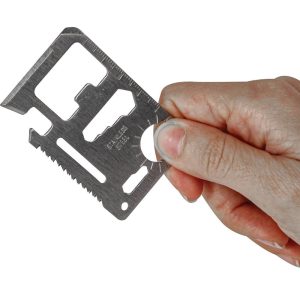
Safety Technology Multi-Function Survival Business Card Tool – 11 Functions, Fits in Wallet, 440 Stainless Steel, 3.75″ x 2″, Leatherette Pouch Included
$4.95 Add to cart -
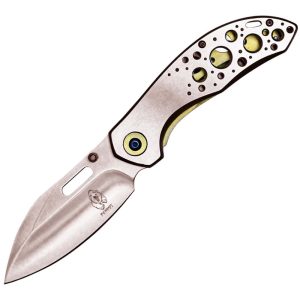
Assisted Open Folding Pocket Knife with Gold Trim, Two-Tone 3.5″ 3Cr13 Steel Blade, Stainless Steel Handle, 8″ Overall, Belt/Visor Clip Included
$18.35 Add to cart -

Safety Technology 8-N-1 Car Charger Power Bank Auto Safety Tool – 1400mAh Power Bank, 120-Lumen Flashlight, Glass Breaker, Seat Belt Cutter, Red Signal Light, Magnetic Mount, USB Charging
$28.95 Add to cart -

Comb Metal Knife with Half-Serrated Blade – Disguised Folding Knife, 3.5-Inch Blade, 6.5-Inch Overall Length, ABS Handle, Available in Black and Pink
$7.95 Select options This product has multiple variants. The options may be chosen on the product page