

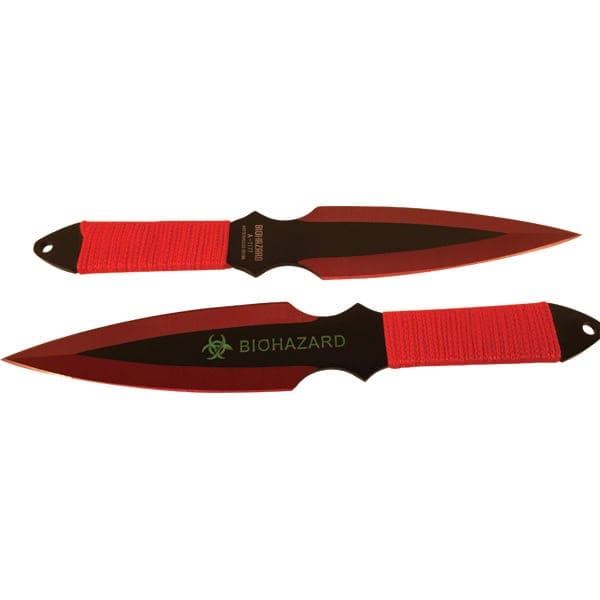
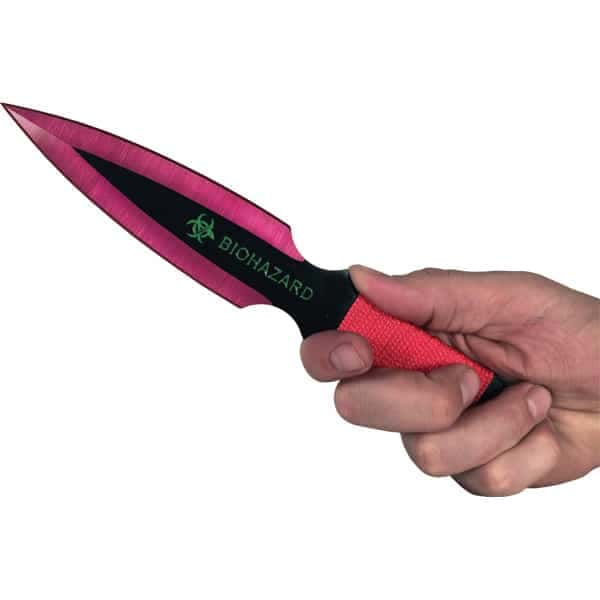
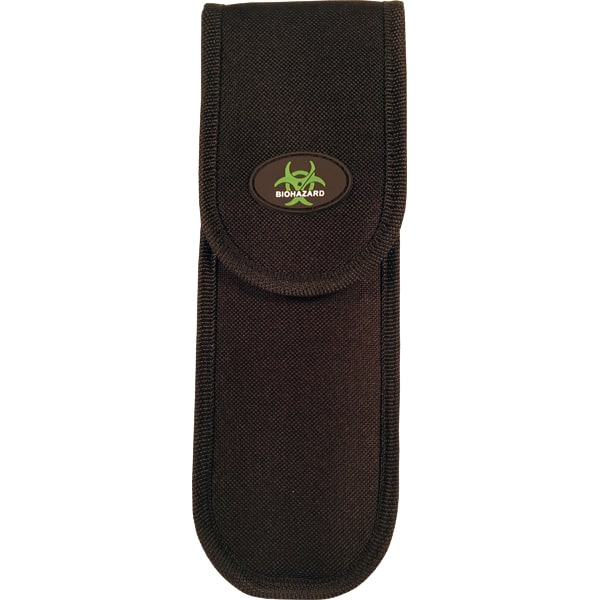
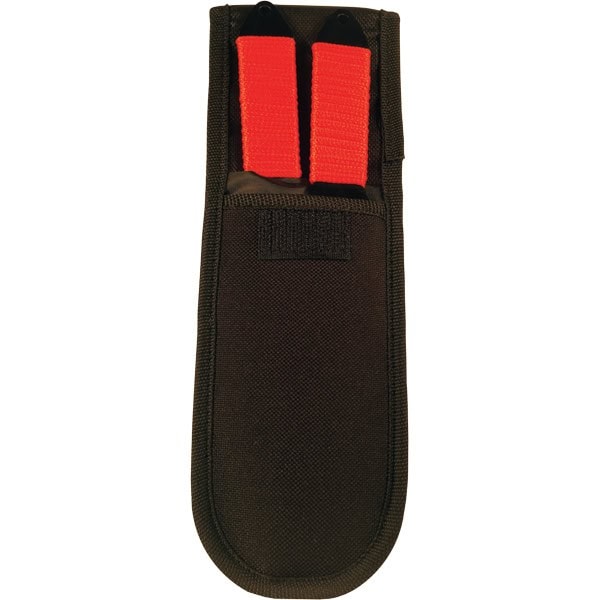
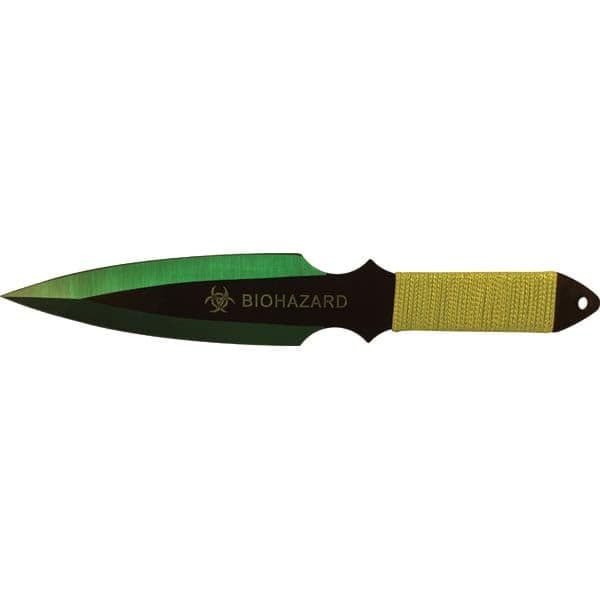
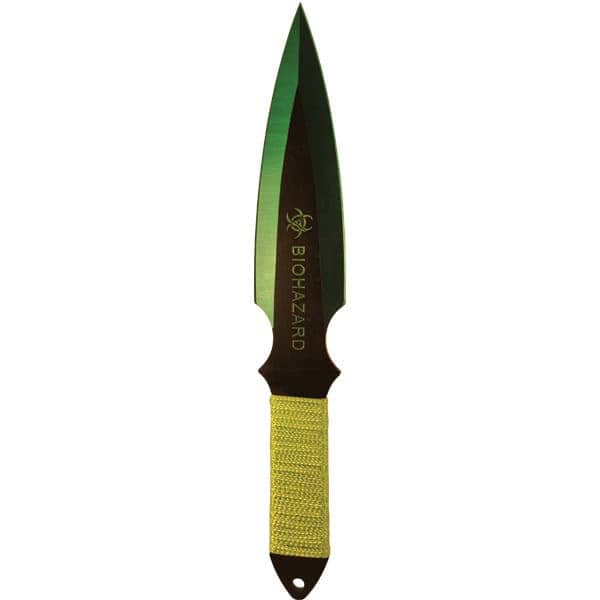
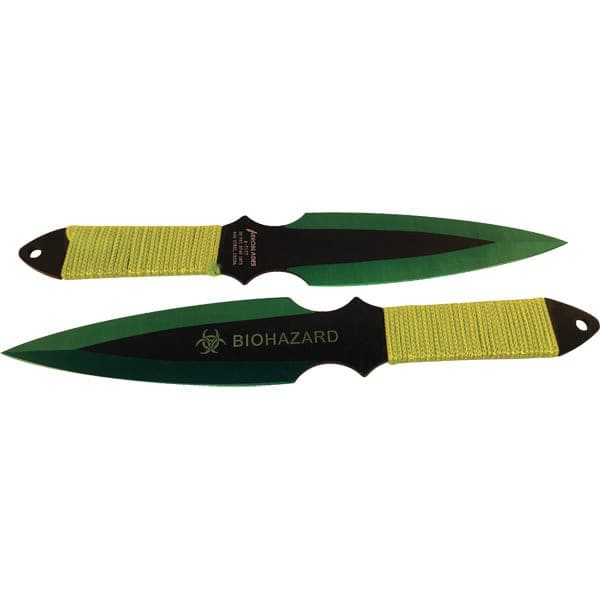
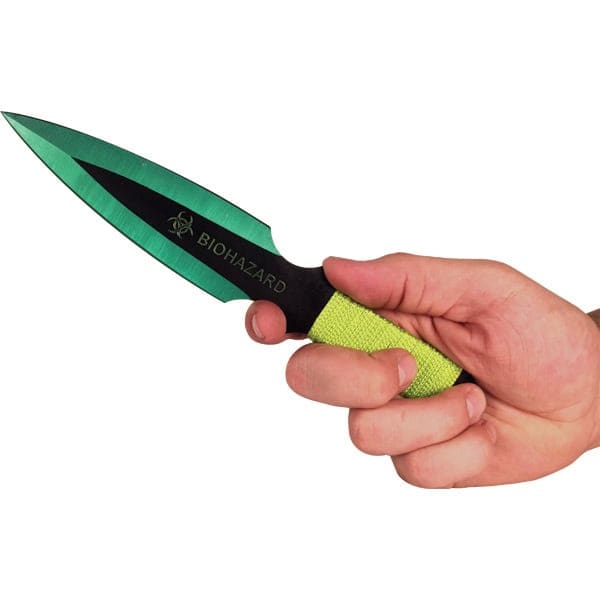

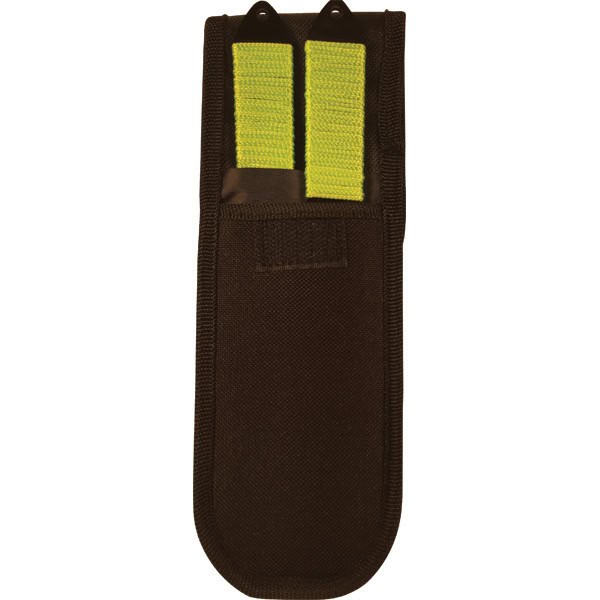
BioHazard 2-Piece Throwing Knife Set – 9 Inch 440 Stainless Steel Blades, Beginner to Intermediate, Includes Sheath Pouch, Available in Red and Green
$15.95
Buy with Confidence
Covered by a 30-Day Money Back Guarantee. If it's not right for you, returns are easy and hassle-free.

Secure checkout • 100% Satisfaction Guaranteed • 30 Day Money Back Guarantee • Easy Returns • Fast Customer Support
A solid starter set for anyone getting into knife throwing. Both blades are 9 inches, made from 440 stainless steel, and balanced well enough to get consistent results while you’re learning form. Comes with a sheath pouch to keep them together when you’re not using them.
- 9-inch overall length — a practical size for learning proper rotation and release
- 440 stainless steel — durable enough for regular practice without chipping easily
- 2-piece set — gives you a spare in hand so you’re not constantly walking to the target
- Includes sheath pouch — keeps both knives together and protected during transport
- Available in red or green — easy to spot in grass or against a wood target
A Reasonable Set to Start With
Knife throwing is a skill — it takes repetition to get the rotation and release consistent. What you need to start is a set that’s the right weight and length, made from steel that won’t crack when it hits the target wrong. These hit that mark without asking you to spend a lot to find out if you enjoy the hobby.
The BioHazard set has been around for a while as a go-to beginner option. Nothing fancy about them — just two well-proportioned blades at a size that makes learning the half-rotation throw approachable.
Who These Throwing Knives Are For
Someone who’s watched a few videos, maybe tried it once with whatever was around, and decided they want an actual set to practice with. The 9-inch length is a commonly recommended starting point — long enough to handle easily, short enough to control the rotation at a reasonable distance.
They also work fine for intermediate throwers who just want an affordable extra set for backyard practice. If you’re setting up a range and don’t want to use your better knives, having a beater set like this makes sense.
The colored handles — red or green — are a practical bonus. Easy to find in the grass when a throw goes a little sideways.
Is This the Right Choice for You?
Choose the BioHazard Throwing Knife Set if you want:
- An affordable 2-piece set to start learning knife throwing
- A well-proportioned 9-inch blade that suits half-rotation throws
- A spare practice set so you’re not putting wear on better knives
- Easy-to-spot colored handles for outdoor range use
Consider something else if you need:
- Competition-grade knives with tighter tolerances and premium steel
- Heavier blades suited to no-spin or longer-distance throwing
What You’re Actually Getting
Two 9-inch knives in 440 stainless steel. The 440 grade holds up well to the kind of repeated impact you get from target practice — it’s not going to develop stress fractures the way cheaper alloys can. At 0.7 lbs for the set, each knife comes in around a reasonable weight for the length.
The sheath pouch is a simple fabric sleeve that holds both knives. It’s not a belt sheath — it’s more of a carry case to keep them together in a bag or on the way to the range. Worth noting if you’re picturing a hip-mounted carry setup.
The BioHazard name and design have a certain look to them. If you’re buying for a younger person who’s into the aesthetic, that’s part of the appeal. If you just want a functional practice set, they work for that too.
Quick Comparison: How Do These Throwing Knives Stack Up?
| Feature | BioHazard 9″ Set | Budget Single Knife | Pro Competition Set | Folding Pocket Knife |
|---|---|---|---|---|
| Pieces Included | 2 ✓ | 1 | 3–6 ✓ | 1 |
| Steel Grade | 440 SS ✓ | Varies | 420/440 ✓ | Varies |
| Skill Level | Beginner–Intermediate ✓ | Beginner | Intermediate–Advanced | Not for throwing |
| Includes Sheath | Yes ✓ | Sometimes | Usually ✓ | N/A |
| Price Range | Budget-friendly ✓ | Very low | Higher | Varies |
| Best For | Learning rotation, backyard practice | Trying it once | Serious practice, competition | EDC carry, utility |
Practical Details
Overall length: 9 inches per knife. Material: 440 stainless steel. Set weight: 0.7 lbs. Includes sheath pouch for both knives. Available in red or green. Not intended for food preparation or everyday carry — these are purpose-built for throwing.
If you want a solid beginner set that won’t fall apart at the target and won’t cost a lot to find out you enjoy the hobby, this is a sensible starting point.
Frequently Asked Questions
What distance should I throw from as a beginner?
Most people start at around 8–10 feet for a half-rotation throw with a 9-inch knife. From there you add distance as you get the rotation consistent. The 9-inch length is well-suited to that range. As you move up in skill and distance, you’ll eventually want heavier or longer blades, but this size will keep you busy for a good while first.
Is the sheath pouch a belt carry sheath or a storage case?
It’s a carry pouch — more of a storage sleeve that holds both knives together for transport. It’s not designed for belt or hip carry. If you want to carry them on your person at the range, you’d need a separate belt sheath. For getting them from your bag to the throwing line, the included pouch does the job.
How is 440 stainless steel for throwing knives?
440 is a solid choice for practice throwing knives. It’s hard enough to hold an edge but has enough toughness to handle repeated impact without cracking. It’s a step up from the cheap mystery-steel knives that can develop stress fractures after regular use. You’ll probably want to resharpen occasionally — tip impact is hard on any blade — but the material holds up well for the price point.
Are these legal to own and use?
Throwing knives are legal to own in most U.S. states, but laws vary by location. In general, they’re treated similarly to other fixed-blade knives. Carrying them concealed in public is a different matter than owning them for sport and backyard practice. Check your local and state regulations before purchasing — that’s just good practice with any knife.
| Type of Knife | Throwing |
|---|---|
| Overall Length | 9 inches |
| Material | 440 Steel |
Additional information
Related products
-
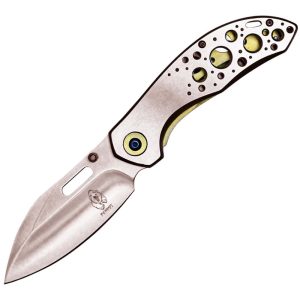
Assisted Open Folding Pocket Knife with Gold Trim, Two-Tone 3.5″ 3Cr13 Steel Blade, Stainless Steel Handle, 8″ Overall, Belt/Visor Clip Included
$18.35 Add to cart -

Stun Master OTF Out the Front Automatic Knife Double Edge Blade 9.5″ OAL – 3.75″ Double-Edge Steel Blade, 5.75″ Handle, Premium Steel Construction, 0.7 lbs
$69.95 Add to cart -

Stun Master 3-Piece Throwing Knife Set – Assorted Colors Black Blue Red, 440 Stainless Steel, 6.5″ Blades, Beginner to Intermediate, Includes Nylon Sheath Pouch
$15.95 Add to cart -

Stun Master OTF Out the Front Automatic Knife Single Edge Blade 9″ OAL – 3.5″ Single-Edge Steel Blade, 5.5″ Handle, Premium Steel Construction, 0.7 lbs
$69.95 Add to cart