
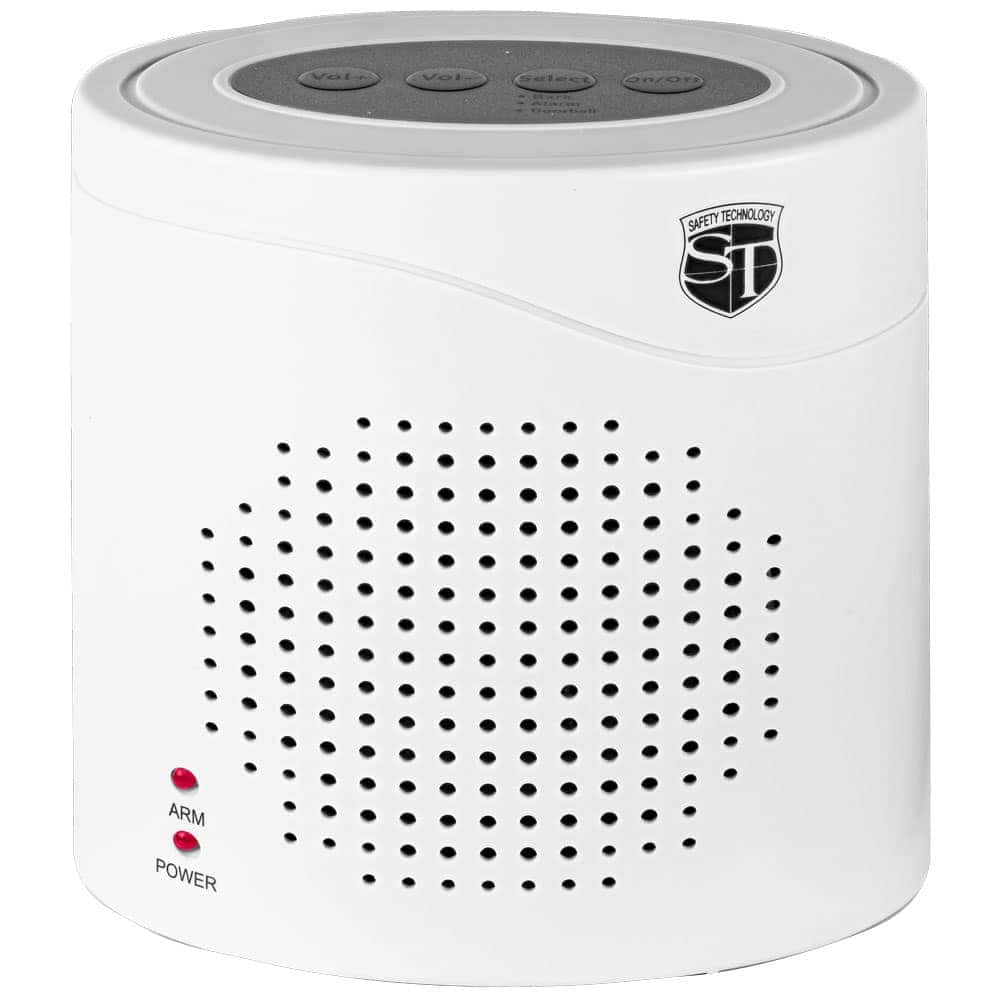
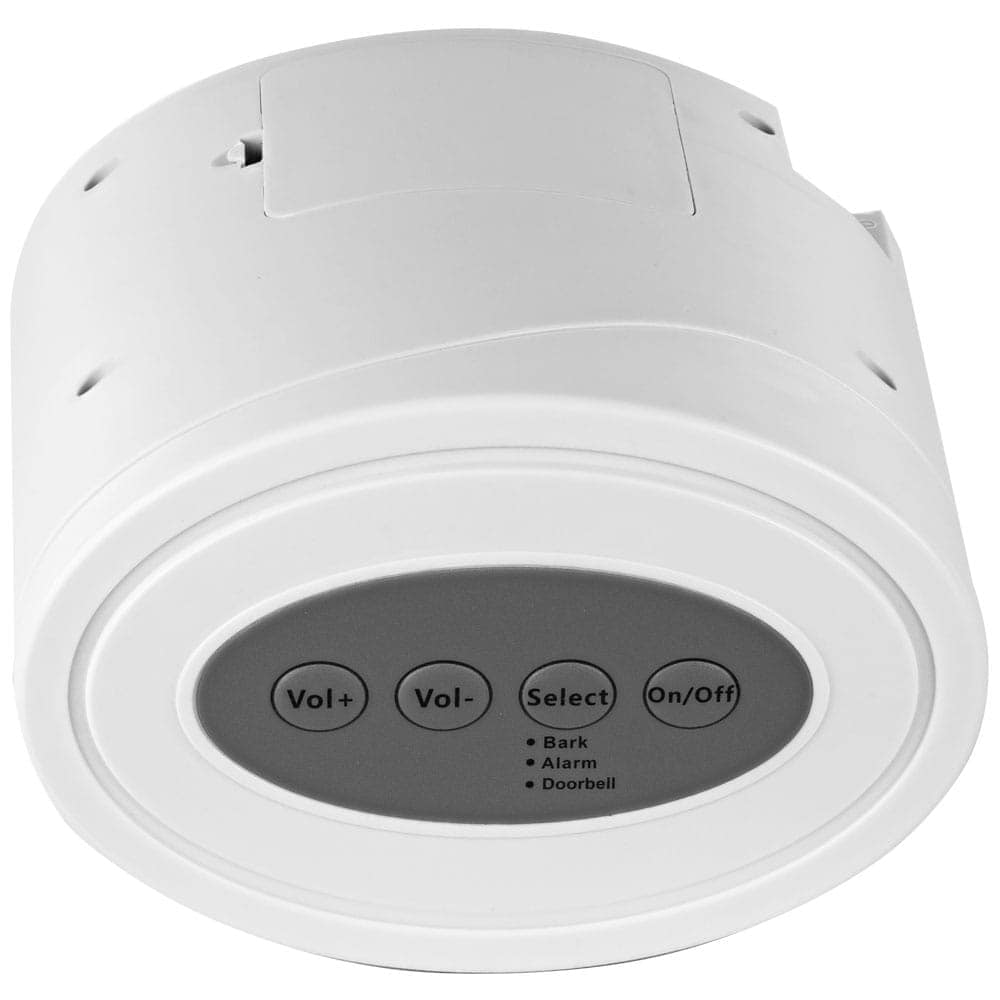
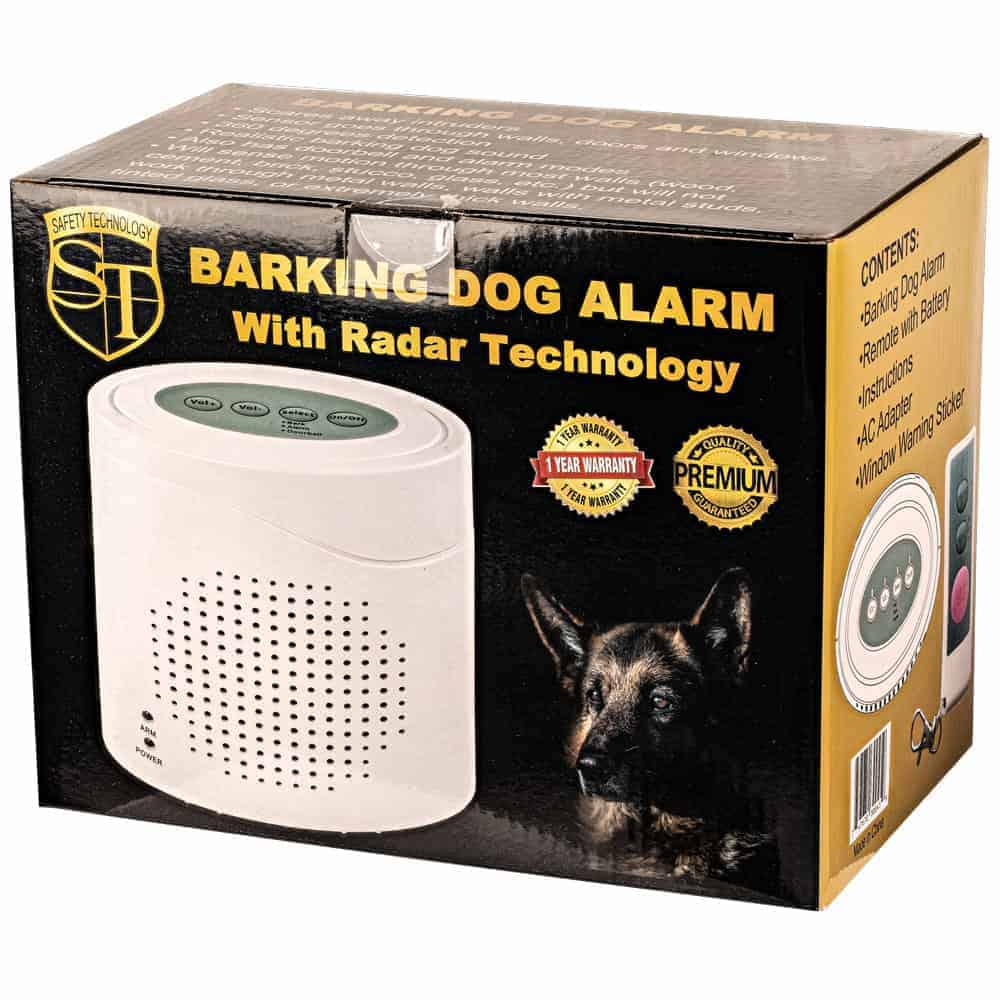
Safety Technology Electronic Barking Dog Alarm with 120dB Siren – Radar Sensor Detects Through Walls and Doors, 50-Foot Range, 3 Modes, Remote Control, AC Powered with Battery Backup
$79.95
Buy with Confidence
Covered by a 30-Day Money Back Guarantee. If it's not right for you, returns are easy and hassle-free.

Secure checkout • 100% Satisfaction Guaranteed • 30 Day Money Back Guarantee • Easy Returns • Fast Customer Support
Most burglars say the same thing when asked what makes them skip a house — a dog. Not necessarily a real one. Just the sound of a dog that sounds like it means business. This alarm uses a radar sensor to detect movement through walls, doors, and windows up to 50 feet away, then fires off a realistic German Shepherd bark that gets more aggressive the closer someone gets. Three modes, remote control, AC powered with battery backup. No leash required.
- Radar sensor detects motion through walls, doors, and glass up to 50 feet — triggers before anyone reaches your door
- Three modes: realistic barking dog, 120dB alarm siren, and door chime for customer/guest notification
- Included remote control for arming, disarming, and mode switching from anywhere in the room
- AC powered with 8 AA battery backup — keeps working even if the power goes out
- Includes window warning sticker and 1-year warranty from Safety Technology
The Dog That Never Needs Walking
There’s a reason “beware of dog” signs work even when there’s no dog behind the door. Most people looking for an easy mark aren’t going to test it. This alarm plays on that exact instinct — the barking sounds like a real, large, unhappy dog, and it gets more aggressive as the sensor detects someone getting closer. From outside, there’s no way to tell the difference.
The radar piece is what makes this more useful than a simple motion-triggered speaker. It sees through walls, doors, and glass — so by the time someone reaches your front step, the alarm has already been going for a few seconds. That’s usually enough to make the decision for them.
Who This Alarm Is For
Homeowners who want a deterrent that works before anyone tries anything. If you live alone, travel frequently, or have a home that’s empty during the day, having something that announces occupancy — loudly — is a practical layer of security. You don’t have to be worried about your neighborhood to see the value in that.
Small business owners use these too. Flip it to chime mode during the day so you know when customers walk in, then switch to full bark mode after hours. One device, two jobs.
It also works well for people who want something simple that doesn’t require cameras, subscriptions, or an app. Plug it in, set the mode, hand the remote to whoever needs it. That’s the setup.
Is This the Right Choice for You?
Choose this barking dog alarm if you want:
- A deterrent that works before someone reaches your door
- No cameras, no subscriptions, no smartphone required
- A device that does double duty as a shop entry chime
- Backup power so it keeps running during an outage
- Remote control operation from anywhere in the room
Consider something else if you need:
- Video recording or remote monitoring — this is audio-only
- Outdoor placement — designed for indoor use
How It Actually Works
The radar sensor is the core of this thing. Unlike a standard PIR motion sensor that needs line-of-sight, radar penetrates walls, doors, and glass. You can set it up inside your living room and it’ll detect someone walking up the front porch before they knock. Detection range goes out to 50 feet, which is enough to give you advance notice in most home layouts.
Once triggered, the barking mode plays a German Shepherd bark that increases in intensity as the sensor picks up the person getting closer. From outside the door, it sounds genuinely like a large dog that heard something and is not happy about it. The 120dB siren mode is there for situations where you want a hard alarm rather than a deterrent — that’s legitimately loud, the kind that gets attention from neighbors.
The chime mode is a nice practical addition. If you run a small shop or home business, you get an audible notification every time someone comes through the door without the dog bark going off every five minutes. Switch modes with the included remote in about a second.
Power comes from AC with 8 AA batteries as backup — so a power cut doesn’t disable it. The included window sticker is a small touch that adds another layer of deterrence before anyone even gets close to the door.
Quick Comparison: How Does This Barking Dog Alarm Stack Up?
| Feature | Barking Dog Alarm | Door/Window Contact Alarm | Motion Sensor Alarm | Security Camera System |
|---|---|---|---|---|
| Detects Through Walls | Yes — radar sensor ✓ | No — contact only | No — line of sight | No — line of sight |
| Deterrent Before Entry | Yes — triggers before door opens ✓ | No — triggers on contact | Partial — depends on placement | Partial — visible camera presence |
| Alarm Volume | 120dB ✓ | Varies (85-120dB) | Varies | N/A — recording only |
| Backup Power | Yes — 8 AA battery backup ✓ | Battery-only (some) ✓ | Varies | Varies |
| Remote Control | Included ✓ | Rarely included | Varies | App-based ✓ |
| Best For | Whole-room perimeter, deterrence | Specific door/window points | Interior room detection | Recording and remote monitoring |
Practical Details
Dimensions: 6″ x 5¾” x 3¾”. Weighs 3.3 lbs. AC powered; 8 AA batteries (not included) provide backup power. Includes AC adapter, remote control with battery, and window warning sticker. Three modes: barking dog, 120dB siren, door chime. Detection range: up to 50 feet through walls, doors, and glass. Color: white. 1-year warranty from Safety Technology.
For under $80, this covers the deterrence piece pretty well — it’s the kind of thing you set up once, forget about, and feel better for having.
Frequently Asked Questions
Does the barking sound realistic?
Realistic enough to do the job. It’s modeled on a German Shepherd bark and the intensity increases as the sensor picks up someone getting closer, which is what makes it convincing — the escalating response sounds like an actual dog reacting to an intruder. Whether it would fool a dog trainer up close is a different question, but through a door at night it’s plenty convincing.
Where’s the best place to put it inside the house?
Near the front of the home, aimed toward the main entry point — front door, driveway side wall, or a room that faces the street. Since the radar passes through walls, you don’t need a window placement. A living room, hallway, or front bedroom gives you good coverage of the approach to the main entry. Keep it elevated — waist height or higher — for best detection.
How far in advance will it detect someone?
Up to 50 feet through walls and doors. In a typical home, that means it’ll pick up someone walking up your front path or stepping onto the porch before they’ve reached the door. The advance notice is one of the things that makes radar detection more useful than a contact alarm, which only triggers once someone actually touches the door or window.
Will pets or small animals set it off?
Potentially, yes — the radar sensor detects movement generally, so a dog or cat moving through the detection area can trigger it. If you have indoor pets, you’d want to test placement to find a direction that covers your entry points while minimizing false triggers from pet movement. Some people point it slightly higher to reduce ground-level pet detection.
| Manufacturer | Safety Technology |
|---|---|
| Battery | 8 AA (Not included) |
| Decibles | 120 db |
| Range | 50 feet |
| Modes | Alarm, Barking Dog, Chime |
| Color | White |
| Included | AC Adapter, Remote with Battery, Window Warning Sticker |
| Warranty | 1 year |
| Weight | 3.3 lbs |
| Dimensions | 6" x 5 ¾” x 3 ¾” |
Additional information
Related products
-
Safety Technology Glass Break Alarm 100dB – Vibration Sensor, 30-Second Siren, Adhesive Mount, 2 Pack, Battery Included, Home and Business Window Security
$15.00 Add to cart -
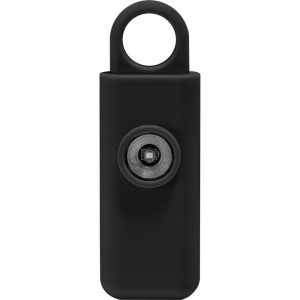
Safety Technology Personal Panic Alarm 130dB with 350-Lumen Strobe Light – Pull-Pin Activation, 2 CR2032 Batteries Included, Key Ring Attach, Black, Blue, or Pink
$15.00 Select options This product has multiple variants. The options may be chosen on the product page -

Safety Technology 3-in-1 Personal Alarm with Flashlight 130dB – Door Alarm, Window Alarm, Laptop Alarm, Strobe Light, Belt Clip, 50-Lumen LED, 9V Battery
$11.95 Add to cart -

Lipstick Personal Alarm 90dB – Discreet Tube Design, Pull-Up Activation, 3¼ Inch, 0.2 lbs, Batteries Included, Available in Pink and Black
$12.95 Select options This product has multiple variants. The options may be chosen on the product page